Dog scared of fireworks? How to keep dogs and cats calm
Published · 10 min read
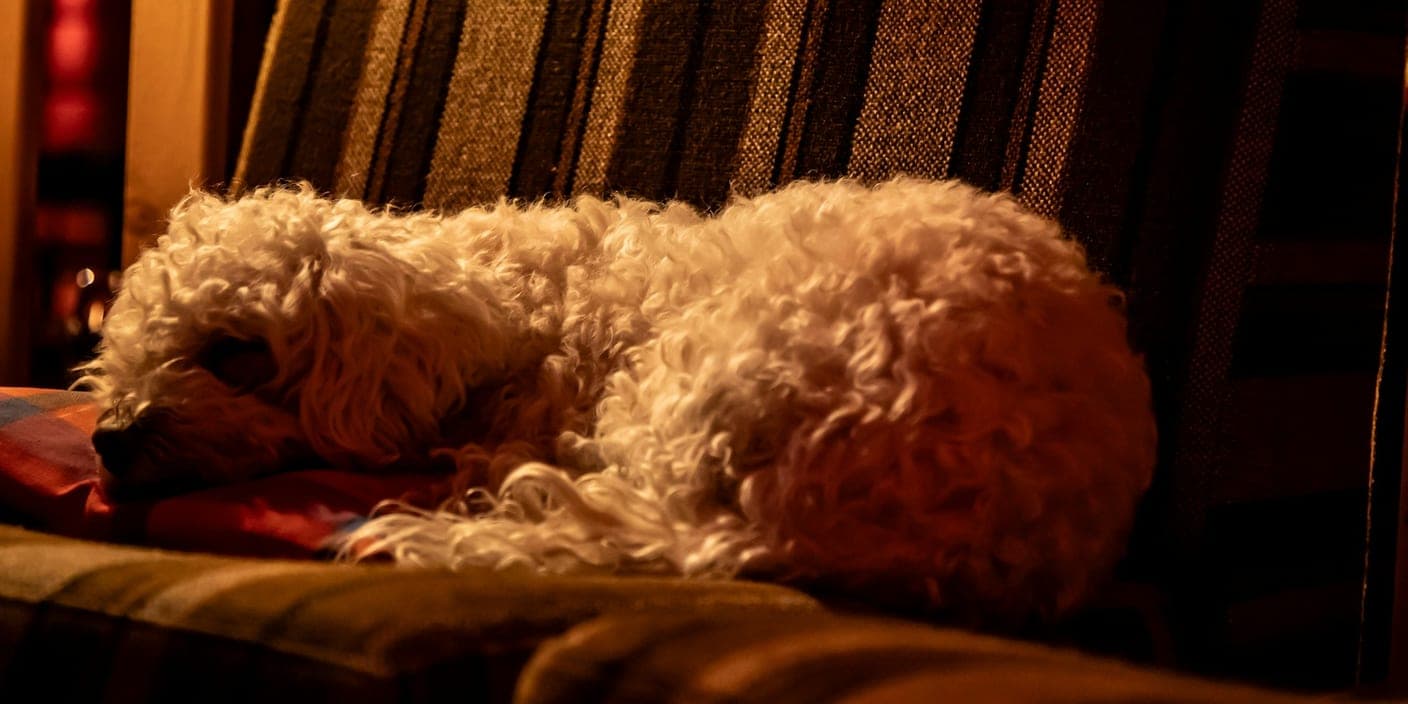
Dogs and cats that disappear on a fireworks night are rarely badly trained. They run because a bang they can't place sets off the urge to flee, and then an open door, a loose harness or an unlocked cat flap is all it takes. The good news is that nearly all of this can be prepared in advance. This plan walks through the weeks before, the night itself and the days after, shows where fireworks are restricted, and lists what to get ready now in case your pet bolts anyway.
In the weeks and days before
Talk to your vet early
If your dog or cat trembles, hides or panics at bangs, book a vet appointment now, not in the last week of December. Your vet can examine your pet and talk you through the options, including whether medication makes sense and whether to try it out beforehand. Don't give your pet human medicines or something prescribed for another animal, and don't buy a calming product on the evening itself and hope for the best.
Start noise training weeks ahead
Some dogs get calmer with gradual sound training: firework recordings played so quietly that your dog barely notices, while it eats or plays, then a little louder over several weeks. If your dog stops eating or looks tense, go back a step. A qualified behaviourist can help you set it up; rushed, this kind of training can make the fear worse.
Check the tag and the microchip record
Put a tag with your mobile number on the collar. Then check your pet's entry with the registry that holds its microchip number: are your current phone number and address there? A chip only helps if whoever finds your pet can reach you. If your pet has never been registered, do it now.
Fit the harness, then secure it twice
A panicking dog can back out of a collar in seconds. Use a well-fitting harness (for slim or nervous dogs, an escape-resistant one with a second strap around the belly) and clip the lead to both harness and collar, with a double-ended lead or a second lead. Check every buckle and clip this week, not on the evening.
Set up a safe room
Pick the quietest room in the middle of your home, with as few windows as possible. Put a bed, water and something to chew in it; a crate covered with a blanket suits dogs that already like their crate. Cats need hiding places both high up and low down, plus a litter tray and water in the same room. Let your pet get to know the room now, so it feels familiar on the night.
Ear protection: practise first
Ear muffs and snug fabric hoods made for dogs can muffle noise. They only help a dog that already accepts them: introduce them days or weeks ahead, a few seconds at a time, with treats, and never put them on for the first time on the night. There is little research on how well they work, and some dogs simply won't tolerate them. Treat them as one tool among several, not as protection you can rely on.
Get the poster kit ready
If your pet runs off anyway, the first minutes count, and you don't want to spend them looking for a good photo. What to prepare is in the box below.
Prepare your pet's missing poster before New Year's Eve
A search starts the moment your pet is gone, and that is the worst moment to hunt for a good photo or a phone charger. Get these ready now and keep them where you'll find them in the dark:
- Three current photos on your phone: the whole body from the side, the face, and any markings. Keep them in an album of their own.
- A short description, written out: breed or mix, size, colour, collar or harness, chip number, and one line for finders, such as: shy, please don't chase or call, phone me.
- Your pet's chip number and the login for the registry that holds it, plus your vet, the nearest emergency vet, the local animal shelter and the police non-emergency number, all saved in your phone.
- The poster page bookmarked: if it comes to it, the free tool turns your photo and the place your pet was last seen into a printable poster with a QR code in a few minutes.
There is nothing to start now: the kit is enough. If your pet goes missing, the poster and the alert take a few minutes to set up. Only create the poster then, because every poster comes with a live missing-pet page that its QR code links to.
On the night: walk early, close up, stay in
Walk in daylight, on the lead
Do the long walk in the afternoon and the last short one before it gets dark. Keep your dog on the lead, even if it is normally reliable off the lead, and even in your own garden. Fireworks often start long before midnight, and in many places on the days before and after as well.
Bring the cats in before dark
Call your cats in, feed them indoors and lock the cat flap. Outdoor cats find this hard, so start a day early if you can, with a litter tray they already know. A frightened cat outdoors usually hides close by, but it may not come out for days.
Windows shut, curtains closed, sound on
Close windows and draw the curtains or blinds before the first rockets, so the flashes stay outside. Leave the lights on, and play the TV, radio or calm music at normal volume to soften the bangs.
Guard the front door
Most escapes happen at a door: guests arriving, someone stepping out to watch. Keep your pet in the safe room with the door shut while people come and go, put a gate across the hallway if you have one, and tell everyone in the house.
Stay with your pet and let it choose
Don't leave a frightened pet alone on this evening. Let it hide wherever it wants; if it comes to you, calm stroking is fine. Don't scold it, don't pull it out of its hiding place, and never take your dog along to watch the fireworks.
After midnight and the following days
Check the garden before letting pets out
Look for gaps in fences and gates, and collect firework debris: spent rockets and batteries are not toys, and duds can still go off. Clear everything away before your dog starts sniffing around.
Keep the lead on for a few more days
In many places stray bangs go on for days. Keep walks short, on the lead and with the double-secured harness until it is quiet again.
Watch for after-effects
Some pets stay jumpy for days, don't want to go out or eat poorly. If it lasts, or if this year was hard, talk to your vet or a qualified behaviourist early in the new year, so there's time for noise training before the next season.
If your pet bolts anyway
If your dog slips its lead or your cat runs out during fireworks, don't chase and don't call loudly. Stay calm, leave something that smells of home at the spot where your pet disappeared, and raise the alarm straight away: neighbours, local shelters and vets, the microchip registry. The step-by-step plan for the first night is in these guides:
Where fireworks are restricted
Firework rules differ between countries, and often between states, councils and cities. These are the rules we could confirm from official sources. Local bans are often announced shortly before the night, so check your council's or city's page as well.
Australia
Outside the Northern Territory, the public sale, use and possession of fireworks without a permit is illegal all year round.
Source: NT WorkSafe
Northern Territory
On Territory Day (1 July) the public may use fireworks from 6pm to 11pm.
Source: NT WorkSafe
Tasmania
Cracker Night in May is the only night of the year when the public can get a fireworks permit.
Source: WorkSafe Tasmania
United Kingdom
England and Wales
No fireworks between 11pm and 7am, except on Bonfire Night (until midnight) and on New Year's Eve, Diwali and Chinese New Year (until 1am).
Source: GOV.UK: Fireworks: the law
You must be 18 to buy adult fireworks. Registered sellers can only sell them from 15 October to 10 November, from 26 to 31 December and in the 3 days before Diwali and Chinese New Year.
Source: GOV.UK: Fireworks: the law
Scotland
Adults may only use fireworks in private places between 6pm and 11pm, until midnight on 5 November and until 1am on New Year's Eve.
Scottish councils can set Firework Control Zones, where nobody may set off fireworks, even on private property. Edinburgh has zones from 30 October to 8 November 2026.
Source: City of Edinburgh Council
Northern Ireland
You need a fireworks licence to buy, possess and use fireworks, apart from indoor fireworks and sparklers.
Source: nidirect: Fireworks
The UK government consulted in 2026 on making louder fireworks available to professionals only. No change had been made when we checked.
Ireland
Only Category 1 (very low hazard) fireworks are on sale to the public. All other categories are only for organised displays by professional operators.
Source: Department of Justice: Fireworks
United States
Whether consumer fireworks are legal depends on your state, and many cities and counties add their own bans. The American Pyrotechnics Association keeps a state-by-state directory; it is an industry body and some state pages date from 2022, so check with your state fire marshal and your city too.
Source: American Pyrotechnics Association: state law directory
The Consumer Product Safety Commission's first piece of advice is the same: make sure fireworks are legal in your area.
Canada
You must be at least 18 to buy, store and use consumer fireworks, and many provinces, cities and municipalities set their own rules on when and where.
Source: Natural Resources Canada
Toronto
Fireworks without a permit are allowed only on Victoria Day and Canada Day, on your own property. On all other days, New Year's Eve included, you need a permit.
Source: City of Toronto
New Zealand
You can only buy fireworks between 2 and 5 November, and only if you are 18 or over.
Some councils ban fireworks in public spaces. In Wellington that includes beaches, reserves, parks and sports fields.
Source: Wellington City Council
Sources checked 19 October 2026
Fireworks-free places to spend the night
Very few places are officially free of fireworks. National parks are one exception, because fireworks are banned there for visitors. Displays and private fireworks in nearby towns can still be heard, and many parks limit where dogs may go, so check the park's pet rules before you book.
United States
Fireworks are prohibited on all National Park Service lands.
Source: National Park Service
Canada
Using, selling or buying fireworks is not permitted inside a national park, and pets must stay on a short lead.
Source: Parks Canada
Sources checked 19 October 2026
Frequently asked questions
- How do I calm my dog during fireworks?
- Set up a quiet room in the middle of your home, close the windows and curtains, and play the TV or music to soften the bangs. Walk your dog in daylight and on the lead, stay home with it, and let it hide if it wants to. If your dog panics every year, talk to your vet weeks in advance.
- Do ear muffs for dogs help with fireworks?
- They can muffle the noise for a dog that accepts them, but there is little research on how well they work. Get your dog used to them days or weeks ahead with treats, never for the first time on the night, and take them off if your dog keeps trying to get rid of them.
- What can I give my dog to calm it during fireworks?
- Only what your vet recommends for your dog. Book an appointment early, because some options have to be started or tried out in advance. Never give your dog human medicines or anything prescribed for another animal.
- Should I keep my cat indoors on New Year's Eve?
- Yes. Bring cats in before dark, lock the cat flap, and give them a litter tray and places to hide. A cat that panics outdoors can stay hidden for days.
- What should I do if my dog runs away during fireworks?
- Don't chase it. Leave something that smells of you where it ran off, report it to shelters, vets and the microchip registry, and alert the neighbourhood straight away. Our guide on dogs that ran away during fireworks has the steps for the first night.
- What time do fireworks have to stop?
- It depends on where you live. In England and Wales, fireworks are not allowed between 11pm and 7am, except until midnight on Bonfire Night and until 1am on New Year's Eve. In Scotland, adults may only use them between 6pm and 11pm, with the same later cut-offs. In the US and Canada, the rules depend on your state, province and city.
You might also like
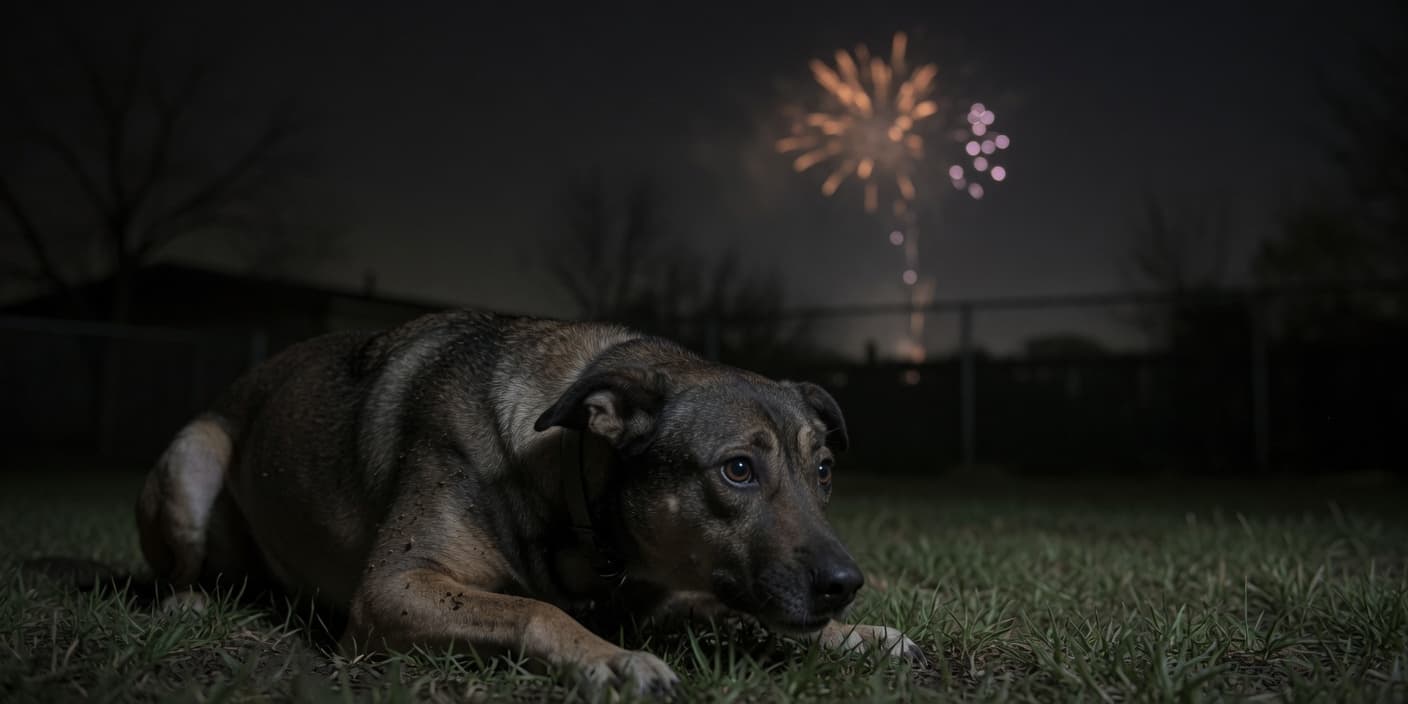
Dog Ran Away During Fireworks: What to Do Right Now
A dog that bolts from fireworks is in survival mode — what actually works in the first hour, the first night, and at first light.
7 min read

How to Find an Indoor Cat That Got Outside
A strictly indoor cat that gets out freezes and hides close to the exit point. Here's how to search effectively and recover it.
6 min read

How to Prevent Your Pet From Getting Lost
A microchip, an ID tag, and a few habits dramatically cut the odds your pet ever goes missing — and prepare you for a fast reunion if it does.
7 min read
Pet Lost on Holiday: What to Do at a Cottage, Campsite or Abroad
Escaped at the holiday address, missing with the sitter, or lost abroad — the plan for each, and what stays behind if you must go home first.
7 min read