Lost Cat: The First 24 Hours
Published · 6 min read

When your cat suddenly isn't there, it's frightening, and the urge to call loudly and search far and wide is strong. Take a breath. With cats, the first 24 hours are best used differently than with dogs: a frightened cat doesn't run away, it hides silently and usually very close by. Owners who understand this search more calmly and deliberately, and find their cat far more often. This guide walks you through the most important hours, step by step.
Understand how a missing cat behaves
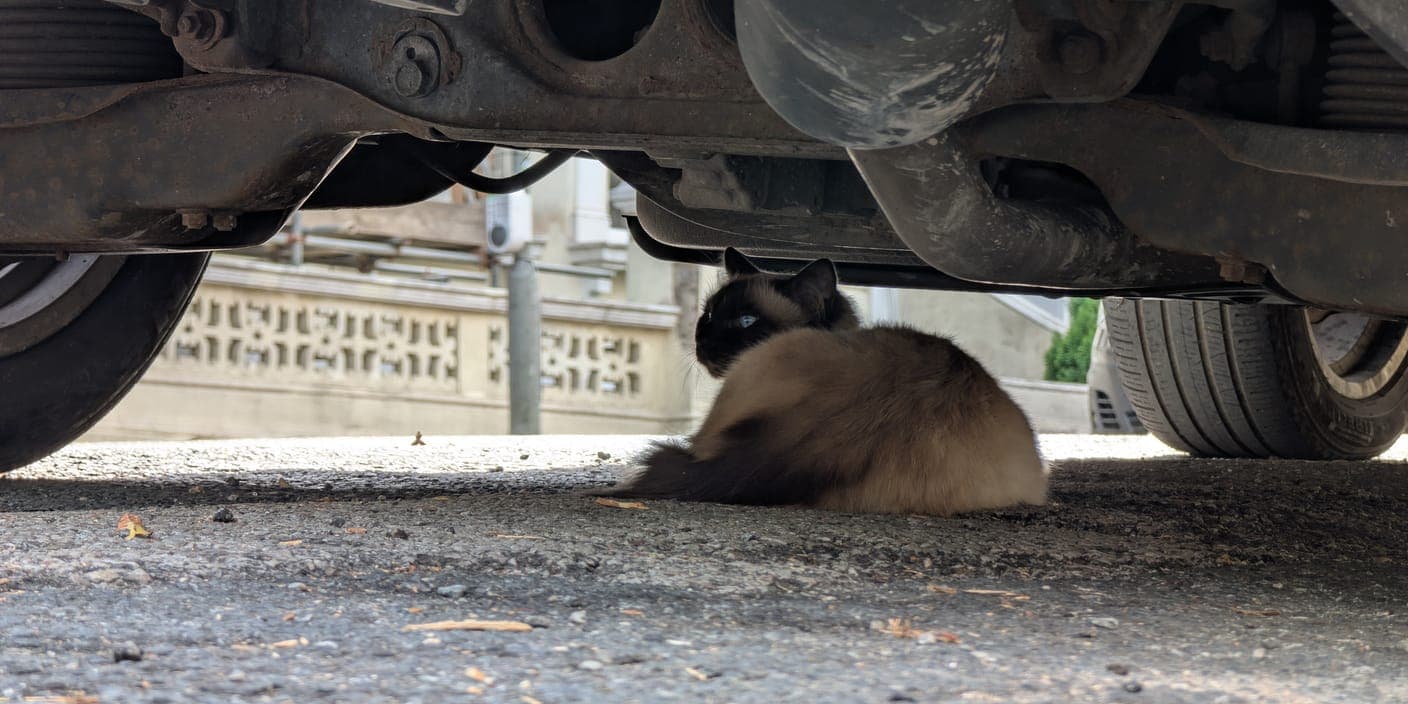
A lost or startled cat does not flee into the distance. It finds the nearest safe, dark hiding spot and stays there motionless, often for hours and without a sound. This is a survival instinct: staying still protects it from predators. That is exactly why loud, wide-ranging searches so often fail. Unlike a dog, which roams and responds to its name, your cat is most likely sitting within just three to five houses of home, quiet and well hidden.
- Most cats hide very close to home, not far away.
- Fear keeps them silent: they often won't meow, even when you're standing right in front of them.
- They are most likely to move at dawn, dusk, or at night, when it's quiet.
- Indoor cats outside for the first time freeze especially hard.
Search the immediate area systematically
Start right at your own door and work outward in tight circles. Move slowly, stop often, and listen. Look low and deep, not at eye level: cats squeeze themselves into tight, ground-level gaps.
- Check your own property first: under the deck, in the shed, the garden house, under bushes, in the undergrowth, behind woodpiles, and beneath parked cars.
- Widen the circle to three to five houses in every direction, because that's where your cat is most likely to be.
- Search at dusk and after dark, when it's quiet, using a torch: in the beam, a cat's eyes reflect and you can spot it from several metres away.
- Call softly and familiarly, in your normal coaxing voice, then pause again and again to listen.
Put out familiar scents
A cat's sense of smell guides it home more reliably than your voice does. So place familiar scents outside your door, ideally where you last saw your cat or where it usually comes and goes.
- Put the used litter box outside, uncleaned: your cat's own scent is a powerful homing signal.
- Add unwashed bedding, its sleeping basket, or a worn item of your clothing.
- Leave a door or window open a crack overnight, in case your cat dares to come back on its own.
- Set out food and water, but don't be surprised if hedgehogs or foxes nibble at it overnight.
Involve your neighbours and surroundings
Garages, sheds, cellars, and garden houses are the most common places a missing cat gets shut in, often by accident, when someone closes a door without realising an animal has slipped inside. That makes your neighbours your most important help right now.
- Knock in person and politely ask people to check their garage, shed, cellar, and garden house, and to leave them open a crack overnight.
- Hand over a clear photo and your phone number so they can reach you immediately.
- Talk to people who are out early or late: delivery drivers, dog walkers, joggers.
Alongside that, a targeted social-media alert from PawAlarm reaches the very people whose door you can't knock on. Your appeal appears as an ad to Facebook and Instagram users in the area where your cat went missing, that is, exactly the residents who might look in their own garden or shed. You multiply your quiet, nearby pairs of eyes without having to walk down every street yourself.
Report your cat officially
Even in the first 24 hours, it's worth informing every official point of contact. If your cat is found, or picked up injured, it can be matched to you straight away.
- Phone the vets nearby, including the emergency clinic, in case your cat is brought in injured.
- Contact the local animal shelter and rescue groups and leave a photo.
- Update your entry with the microchip registry and report your cat as missing there.
- Check that your contact details on the collar and in the registry are current.
Stay calm and persistent. The vast majority of cats are found very close to home, often only after one or two days, when hunger finally coaxes them out of hiding. Keep searching at the quiet times, keep the familiar scents fresh, and keep your appeal visible with your neighbours and online. Patience and a tight, quiet search radius are your best tools.
If your cat isn't back after the first day, carry on with the complete search plan for the days and weeks that follow.
Frequently asked questions
- How far does a lost cat actually travel?
- Usually not far. A frightened cat typically hides within just three to five houses of home and stays put. So focus your search on the immediate neighbourhood first, before looking further afield.
- Why won't my cat meow when I call it?
- Out of fear. Staying silent is a survival instinct that protects it from predators. Even when you're standing right by its hiding spot, your cat may stay quiet. So search with your eyes and a torch, not just your ears.
- What's the best time of day to search?
- At dawn, dusk, and at night, when it's quiet. A hidden cat is more likely to move then, and in a torch beam its eyes reflect, so you can spot it from several metres away.
- Does putting out the litter box really help?
- Yes. The familiar scent of the used litter box is a strong homing signal. Add unwashed bedding or its sleeping basket near your door to reinforce it.
- Should I start a social-media alert on the first day?
- Yes. The sooner nearby residents know, the sooner they'll check their garage and shed, exactly where cats get shut in. A targeted alert from PawAlarm reaches those neighbours directly on Facebook and Instagram.
You might also like
How to Find a Lost Cat: A Step-by-Step Search Plan
The complete search plan for a lost cat, from a quiet night search close to home to scent, feeding stations, traps, posters, reporting and the weeks after.
9 min read

Where Do Lost Cats Hide? (Closer Than You Think)
Why a lost cat usually sits silently nearby — and how to search methodically in the small radius where it's actually hiding.
8 min read

How to Find an Indoor Cat That Got Outside
A strictly indoor cat that gets out freezes and hides close to the exit point. Here's how to search effectively and recover it.
6 min read

How to Make a Lost-Pet Poster That Actually Works
A poster that works needs one big photo, one huge word, and only the essentials. Here is exactly how to build and place it.
7 min read