How Far Do Lost Dogs Travel? Set Your Search Radius Right
Published · 7 min read

When a dog goes missing, the first question is almost always the same: how far could they have gone? The honest answer is that it depends far less on breed than most people assume, and far more on how the dog behaves once it is loose. A confident, curious dog can cover several kilometres in a few hours, while a frightened dog often hunkers down just a few hundred metres away and stays put for hours. Understanding this means you stop searching blindly in every direction and start putting your energy where the dog is most likely to be.
Behaviour drives distance, not breed
Lost-pet recovery groups that have logged thousands of cases keep reaching the same conclusion: the single biggest factor in how far a dog travels is its temperament at the moment it bolts, not its size or breed. Broadly, dogs fall into three types, and each one calls for a different search strategy.
- Confident, sociable dogs tend to roam the furthest. They travel in straighter lines, follow scents and people, and can cover surprising ground in a single night.
- Cautious dogs usually stay closer but move in irregular loops, popping up here and there rather than settling.
- Fearful or shy dogs drop into survival mode: they hide close to where they got loose, avoid people — including their own owners — and barely respond to being called. We cover this behaviour in depth in our guide to lost dog syndrome.
What pushes the distance out
Several circumstances move the likely search radius noticeably outward. The more of them apply, the more generously you should plan.
- What spooked them: fireworks, thunderstorms, a loud bang or an accident trigger pure panic. A dog scared like this often runs for kilometres before it even slows down.
- Size and fitness: small dogs are statistically found closer, while big, athletic and young dogs cover more ground and clear obstacles more easily.
- The terrain: in town, roads, fences and traffic slow a dog down but also redirect it. In the countryside or woods there are fewer barriers, so the dog can travel straighter and further.
- Time missing: in the first hours the radius stays small. The longer a dog is out, the larger the possible area — though many dogs eventually settle into a territory rather than walking endlessly onward.
- The weather: heat, cold or heavy rain shorten the distance because the dog seeks shelter sooner. Mild weather keeps it moving for longer.
How to set your search radius
The most common mistake is to search wide immediately. Start tight and expand systematically. Most dogs are found early, close to where they got loose — often within about one to two kilometres (roughly a mile). Only once you have thoroughly covered the nearby area should you widen the radius.
- Zone 1 — the core: search the first few hundred metres around the escape point especially carefully, including every hiding spot such as hedges, garages, sheds and undergrowth.
- Zone 2 — the near radius: expand to roughly one to two kilometres (about a mile) and deliberately talk to residents, postal workers and other dog owners.
- Zone 3 — the wide radius: for panicked, large or long-missing dogs, plan for five kilometres (about three miles) and beyond, especially along paths, streams and the natural lines of the landscape.
Think about direction as you build your grid, too. Dogs tend to follow the path of least resistance: open trails, footpaths, streams and quiet roads. Dead ends, solid fences and busy roads act as barriers that redirect the dog rather than letting it cross.
Covering a wide radius all at once
You cannot walk every street in person — and while you are searching to the north, your dog could already have been spotted to the south. This is exactly where a targeted alert earns its keep: instead of physically covering kilometre after kilometre yourself, you reach all the people who happen to be in your search area right now, in one go.
PawAlarm does this by running targeted ads on Facebook and Instagram, delivered to people in the area around the escape point. Residents, walkers and commuters see your dog's photo and description directly in their feed — including the crucial reminder not to chase a shy dog but simply to report its location. That turns everyone within the radius into an extra set of eyes, without you having to be there yourself.
You match the radius to the behaviour type: tight and intensive around the escape point for the shy dog, broad and along the likely line of travel for the far-roaming one. Combined with the classic posters on the ground, this lets you cover far more ground than would ever be possible on foot.
In short: how far your dog travels can never be predicted exactly, but its behaviour tells you the likely direction and reach. Read your dog's type, start tight, expand thoughtfully — and let the neighbourhood within the right radius search alongside you. Calm, a clear plan and plenty of eyes bring most dogs home.
Frequently asked questions
- How far can a dog travel in one night?
- It depends heavily on behaviour. A frightened dog often hides just a few hundred metres away, while a confident or panicked dog can easily cover five to ten kilometres (roughly three to six miles) or more in a single night — especially across open terrain.
- Do small dogs stay closer than big ones?
- Statistically, small dogs are usually found closer to the escape point because they cover less ground and get caught up at obstacles more easily. But temperament still rules: a small, very anxious dog can run far in panic, while a big, calm dog may stay close.
- Which direction should I search first?
- Follow the path of least resistance from the escape point: open trails, footpaths, streams and quiet roads. Busy roads, solid fences and dead ends act as barriers that tend to redirect the dog rather than being crossed, so prioritise the easier routes first.
- My dog bolted from fireworks — how far could they be?
- Panic triggered by fireworks or a thunderstorm produces some of the longest distances. Plan for a noticeably larger radius than usual and search early along the natural line of travel. Importantly, these dogs are in survival mode and should be located, not chased.
- How does an online alert help with a wide search radius?
- A targeted ad on Facebook and Instagram reaches many people around the escape point at the same time. That lets you cover a large radius all at once instead of walking every street yourself, and everyone in the area becomes an extra set of eyes who can report a sighting.
You might also like

Lost Dog Syndrome: Why Your Dog Runs From You
Why a frightened dog in flight mode stops recognizing even its owner — and how to calmly win it back.
8 min read

Lost Dog: What to Do in the First 24 Hours
A calm, step-by-step action plan for the first 24 hours after your dog goes missing.
7 min read

Can Dogs Find Their Way Home on Their Own?
Some dogs really do find their way home on instinct alone — but waiting for that to happen is the single biggest mistake a lost-dog owner can make.
7 min read
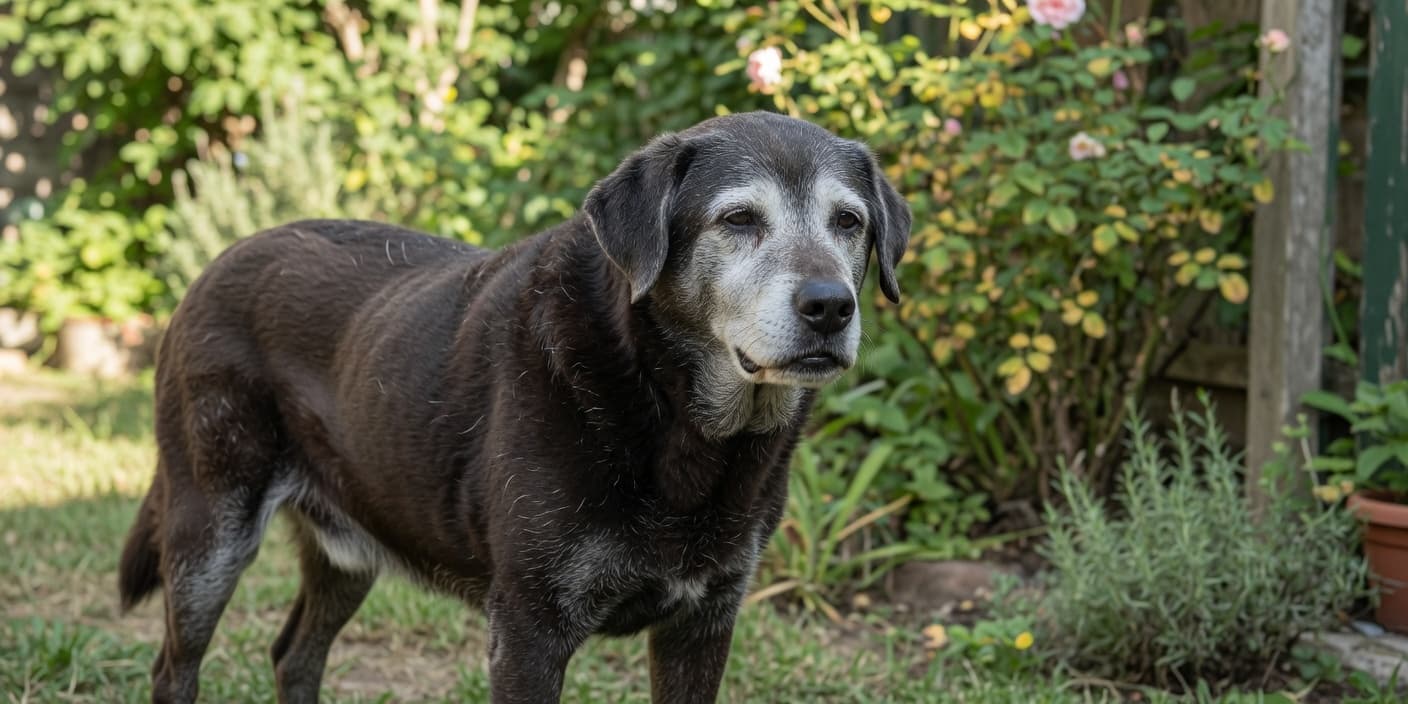
Lost Senior Dog: Why Old Dogs Wander Off and Where to Look
Why old dogs lose their bearings, why they almost always end up close by — and how to search systematically for a deaf, blind or confused senior dog.
7 min read