Cat Locked in a Garage or Shed: How to Find a Shut-In Cat
Published · 7 min read
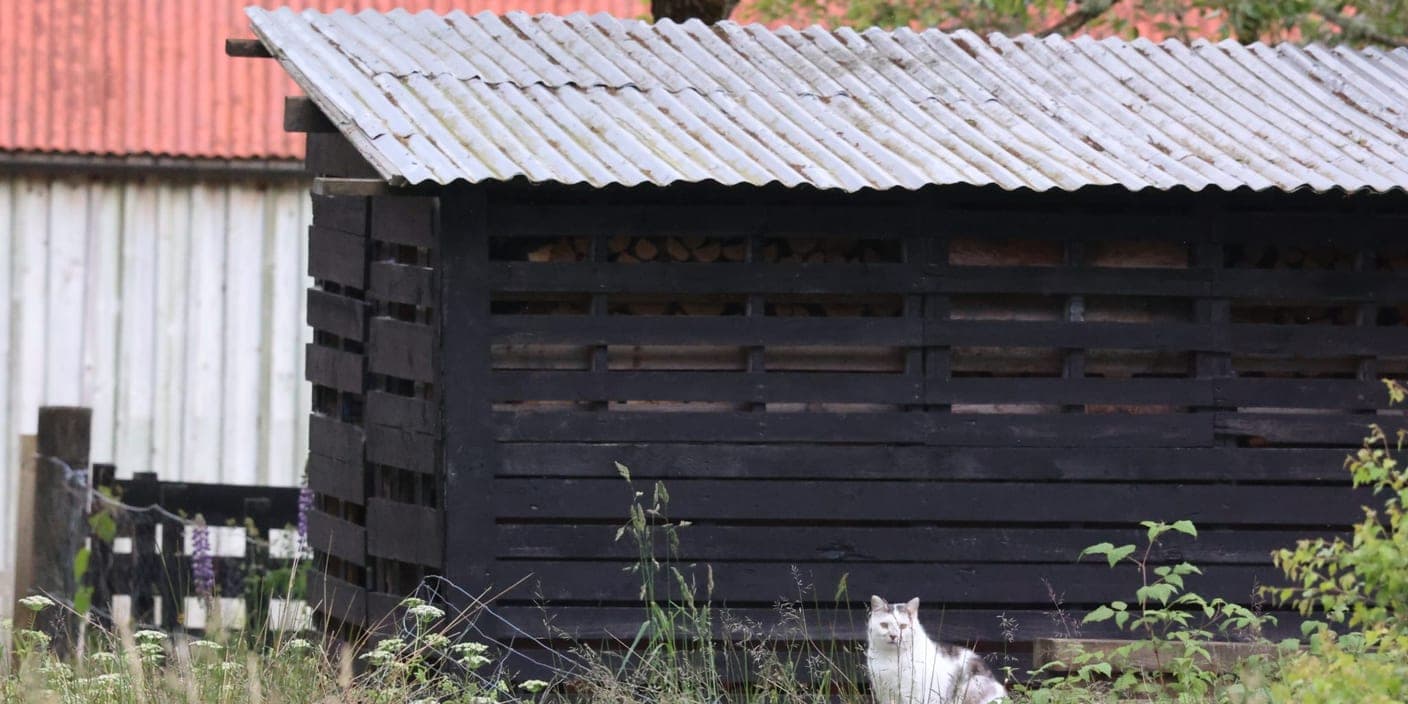
Your cat has come home every evening for years, and now it has been gone for three days. The most common reason a confident outdoor cat vanishes for days is a garage, shed, cellar or van that stood open and then closed. It is usually unhurt, within 200 metres (a couple of hundred yards) of home, waiting for that door to open.
How to tell your cat is shut in somewhere
The calendar and your cat's habits give strong clues:
- A cat with a fixed routine — home for dinner, in by dark — suddenly stays out. Roamers roam; routine cats disappear because something stopped them coming back.
- The disappearance lines up with a date: a neighbour left for holiday, a shed was tidied at the weekend, a removal van worked in the street, builders locked up on Friday.
- Nobody has seen it at all. A cat roaming outdoors is usually spotted at least once; a shut-in cat leaves no sightings.
Why time matters: a shut-in cat is safe from traffic and predators but cut off from water. Cats manage without food for a surprisingly long time; without water it turns serious within days, faster in a hot garage. Treat the search as urgent from the first evening.
The listen-at-dusk protocol
A shut-in cat often calls once it hears you — but only in silence. So listen at the quiet hours, twice a day:
- Go out at dusk and again in the hour before dawn, when the street is quietest and cats naturally become active and vocal.
- Walk slowly past every building within 100 to 200 metres: garages, sheds, cellars, greenhouses, allotment huts, caravans, building sites.
- At every door, shake the treat box or tap the food bowl, call the name once in a normal voice — then stay silent for a full minute. Count it out.
- Shine a torch (flashlight) under garage doors, through windows and vents: two reflecting eyes on the floor or a shelf. Note which buildings were only checked from outside — that is your door-knocking map.
Knock on every door — and ask them to open, not just to answer
Listening finds the cats that answer; the silent ones are found by someone opening a door. Canvass every household within 100 to 200 metres in person:
- Ask each neighbour to physically open and check garage, shed, cellar, greenhouse, caravan, car and loft — today, with you if they allow it. ‘It's definitely not in there’ is not a check.
- For neighbours who are out, leave a note with photo, date, phone number and the specific request: please open your shed and garage and look.
- Ask who is away on holiday and who holds their key: a cat behind a locked garage door cannot wait two weeks.
- Ask builders nearby to check containers, site huts and any floor closed up since the cat disappeared, and note which delivery and removal vans were in the street that day.
You cannot reach every household on foot, and the family two streets over has no idea anything is missing. PawAlarm closes that gap: it shows your cat's photo as targeted Facebook and Instagram ads to the people living around the spot where it disappeared, plus a printable poster for your round. Put the exact request in the alert text: please open and check garages and sheds.
The van scenario: cats released miles away
Not every shut-in cat stays in the street. A cat climbs into an open removal lorry (moving truck), delivery van or parked car and the door closes; when it opens again, the cat bolts at a depot or a customer's address 30 kilometres (20 miles) away. If a vehicle stood open near your home that day:
- Reconstruct the day hour by hour: which vehicles were in the street, when they came and went, who was moving house, receiving a delivery or having work done.
- Call the company, not just the driver: ask for the route and every stop, and have them check the vehicle and the depot — cats often hide in a vehicle for hours before leaving it.
- Ask where the doors were opened first: that address is your second search area, so run an alert around both the departure street and the arrival area — strangers there have no idea where the cat belongs.
- Check your microchip registration now and update an old phone number. A cat found far from home is scanned at a vet or shelter there, and the chip is the only link back to you; in Europe, Europetnet looks a chip number up across national databases.
Found it? Water first, then the vet, then prevention
When a door finally opens and your cat is behind it, do not just carry it home and refill the bowl. A cat that spent days without water needs a little care:
- Watch for dehydration: lift the skin at the scruff — if it sinks back slowly instead of snapping flat, the cat is dry. Tacky gums, sunken eyes and lethargy point the same way.
- Offer small amounts of water every 20 to 30 minutes rather than a full bowl; a parched cat that gulps often vomits it straight back. Keep the first meals small too.
- See a vet the same day if the cat was shut in for more than two or three days, is weak, is not urinating, or may have licked antifreeze or rodent bait. A prolonged fast is also hard on a cat's liver.
- Prevention: a quick-release (breakaway) collar with an ID tag and a small bell, so whoever opens the door knows whose cat it is and you can hear it through a closed door, plus a ‘shed check’ habit for the street: a glance inside before locking up, a message in the neighbourhood chat before a holiday.
Frequently asked questions
- How do I know if my cat is locked in a garage or shed?
- Look at the pattern: a routine cat that suddenly stays out, no sightings at all, and a disappearance that coincides with a neighbour going on holiday, a shed being tidied or a van in the street. Confirm it by listening at dusk and getting every building within 200 metres opened.
- Why doesn't my cat meow if it is shut in?
- Because a scared cat's first instinct is to stay silent, and a meow through a closed door is far fainter than you expect. Cats tend to call at the quiet hours, when they hear a familiar voice or the treat box — which is why silence never proves a building is empty.
- How long can a cat survive locked in a shed or garage?
- Long enough to keep searching for weeks, not long enough to wait politely. Food is rarely the problem; water is: without it a cat is in serious trouble within days, sooner in summer heat. Our guide on how long a lost cat can survive goes into the details.
- Could my cat have climbed into a delivery van or moving truck?
- Yes, whenever a vehicle stood open near your home that day. Cats climb into vans and cars for warmth and cover and can be released miles away. Call the companies, ask for the route and stops, and search around the first place the doors were opened.
- My cat came back after being shut in for days — does it need a vet?
- If it was shut in for more than two or three days, yes, even if it looks fine. Dehydration, a prolonged fast and possible contact with garage chemicals are reason enough for a check. Offer water in small portions, keep the first meals small, and watch urination and energy.
You might also like

Where Do Lost Cats Hide? (Closer Than You Think)
Why a lost cat usually sits silently nearby — and how to search methodically in the small radius where it's actually hiding.
8 min read

Cat Missing for 2 Days or a Week: Will It Come Back?
What it means when your cat has been gone for days, how likely it is to come back on its own, and a day-by-day plan to bring it home faster.
7 min read
How Long Can a Lost Cat Survive? Food, Water, Weather
Cats survive outdoors for days to weeks — water, not food, is the limiting factor. What that means for your search, and when the clock really is against you.
7 min read

How to Find a Lost Cat at Night: The Best Time to Search
Why night is your best chance, how to use a flashlight to catch the eye-shine — and how to search quietly enough that your cat dares to come out.
6 min read