Cat Lost After Moving House: How to Get Them Back
Published · 7 min read
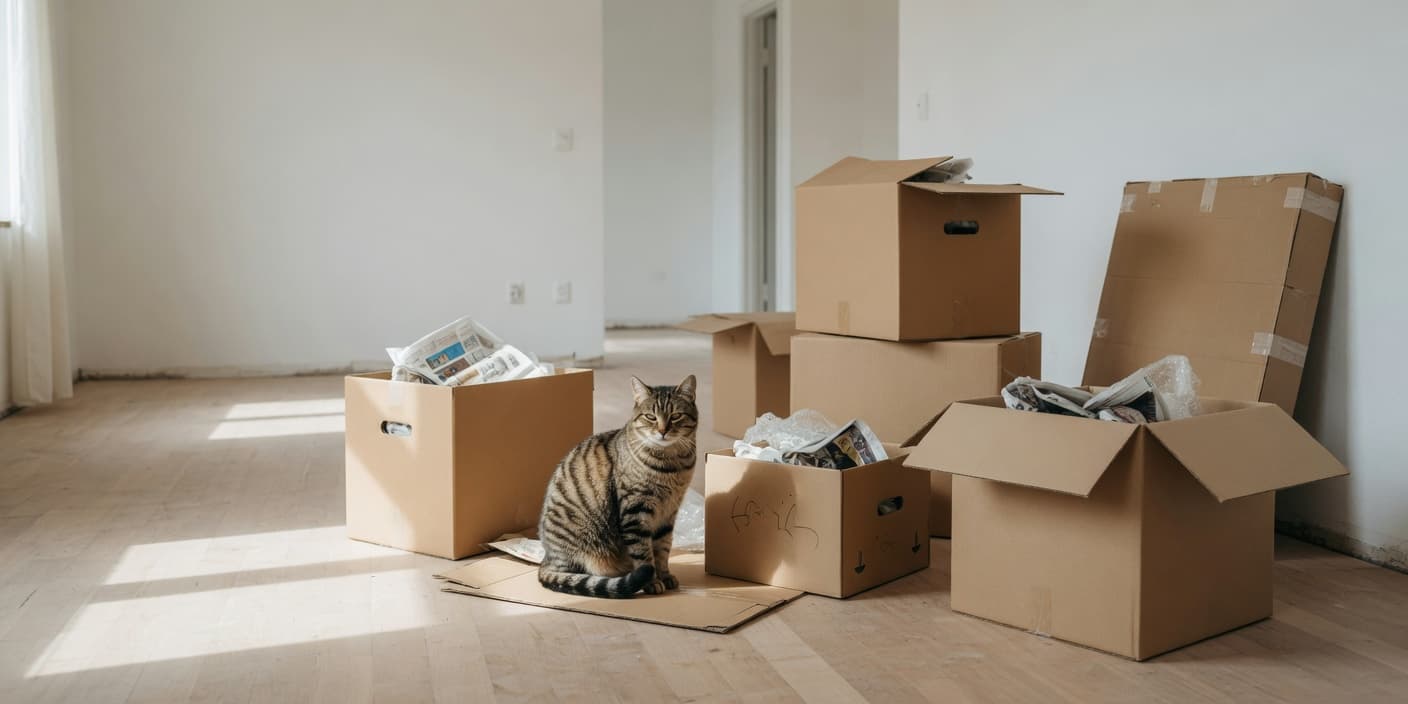
The move is done, the boxes are still stacked in the hallway — and the cat is gone. It is one of the most common moments for a cat to go missing, and also one of the most recoverable. A cat that disappears right after a move is not a roaming cat, it is a displaced cat: no territory, no scent map, no safe routes. It does not travel far. It hides — silently, often only a few houses away, and usually it will not answer even your voice. Your whole search has to be built around that.
Why do cats run away when you move?
Because a move erases their territory overnight. Cats navigate by a scent map of marked landmarks — doorsteps, hedges, fence lines, paths. In the new home nothing smells of them, and outside there is not a single familiar point. An open door then triggers a bolt reflex, not an outing. The typical triggers:
- An indoor cat slips out on moving day, while doors and windows stand open and strangers carry furniture through the house.
- An outdoor cat is let out too early — before the first two to four weeks are up — and cannot find its way back in.
- The cat escapes during transport itself: carrier, van, stairwell, underground car park.
The consequence is what matters: a displaced cat does not behave like your cat. It typically stays wedged into one single spot for seven to fourteen days, moves only at night, and stays silent even when you call from two metres away. Hearing nothing is not evidence that it is not there.
Search the new house first — genuinely first
Before you walk a single street, search the house. A surprising share of cats reported missing after a move never left it: a half-unpacked home offers hiding places that will never exist again.
- Inside the sofa or the divan base — cats slip through a tear in the lining and sit within the furniture itself.
- Inside a taped-up moving box, a closed wardrobe, or a drawer you pushed shut without looking.
- Behind or underneath the fridge, washing machine and fitted kitchen units, and behind kickboards.
- Behind the bath panel, in the boiler room, cellar, loft or crawl space — on moving day exactly those doors stand open.
- On top of high cabinets, in suspended ceilings, under the stairs — and inside the removal van itself.
Search with method: one room at a time, at night, all lights off, everyone in the household silent. Sweep a torch low across the floor — in a dark room reflective eyes give a cat away instantly, while by daylight it stays invisible. Shake dry food, open a pouch, then stay completely still for thirty seconds and listen. One rustle is enough.
A metre-by-metre night search around the new home
Most lost cats are found within about 500 metres of the point they escaped from — and for a freshly moved cat the radius is usually smaller still. So start with the three to five properties in each direction, roughly a 100-metre radius, and only widen after that. The best window is between 11 p.m. and 3 a.m., when the street has gone quiet.
- Hold the torch just above ground level and light up under decking, sheds, garages, cars, hedges, dense shrubs, log piles and garden furniture.
- Call softly in a normal voice, then go silent for a full minute and listen — a displaced cat answers at most with a barely audible chirp.
- Ask every neighbour to open the garage, shed, cellar and carport, and to check them each evening before locking up.
- Leave a note with a photo and your phone number at every house nearby — you are new here and know nobody, and that is your single biggest disadvantage.
Check the old address — cats really do travel back
Yes, some cats do try to get back to the old home — mostly after moves within the same town or over a few kilometres. It is the minority, but it is the one place nobody is watching, because the people who would recognise your cat no longer live there.
- Contact the new residents of the old address today: photo, phone number, and a request to check the garden, garage and cellar and never to chase the cat.
- Alert the old neighbours specifically — above all the ones who used to feed your cat or whose garden it used.
- Put a poster up at the old address and at the nearest shops, not only around the new one.
- Leave the cat's bed, a blanket and the used litter tray outside the old front door — its own scent carries at a distance.
- Report the cat to shelters, vets, police and lost-property offices around both addresses, and call back every two or three days.
And the step forgotten most often after a move: update your address and phone number in the microchip registry the same day. A microchip is only as good as the contact details behind it — otherwise the record points a finder to a flat you no longer live in.
If she will not let you near: feeding station, camera, trap
As soon as you have a sighting or a solid suspicion, stop searching and start monitoring. Set up a feeding station: one small portion of strong-smelling wet food, every evening at dusk, always in the same sheltered spot. Beside it put a worn T-shirt, the cat's bed and the used litter — next to the food, not in it.
A trail camera for under 100 pounds or dollars tells you within a single night whether it is your cat and what time it comes. If it eats reliably but will not be touched, a humane trap is the next step: 90 to 100 centimetres, usually borrowed from a shelter or rescue, checked at least every one to two hours and never left unattended.
The second disadvantage after a move is that you know nobody in the new neighbourhood — and that part you can simply buy. With PawAlarm your appeal reaches the residents around the new address as an ad on Facebook and Instagram, and you get a printable poster with a QR code for entrances and shop windows. And once she is home: keep her strictly indoors for three to four weeks, starting with a single room and expanding to the whole flat, and make the first trip outside a hungry one — just before a meal, short, and with you standing there.
Frequently asked questions
- Will my cat come back after moving house?
- Most do come back or get found, usually within the first two weeks and within roughly 500 metres of the new home. A freshly moved cat has no territory yet, so it hides rather than roams. Keep a feeding station running and search at night, and your odds rise sharply.
- Why do cats run away when you move?
- Because their territory has vanished. Cats orient themselves by familiar smells and routes, and after a move both are gone, indoors and out. The cat panics, bolts through the first open door, and then hides in the nearest safe spot — normally very close by.
- How long should a cat stay indoors after moving house?
- At least two weeks, ideally three to four. Start in one quiet room with the litter tray, food and familiar blankets, then expand to the whole home. Make the first outing a hungry one: just before a meal, supervised, and only for a few minutes.
- Can a cat find its way back to the old house?
- Some manage it, mainly after short moves within the same town. Over several kilometres it is rare and takes weeks. Either way, alert the new residents and the old neighbours immediately, because nobody else is looking there.
- How far can a cat get on the first night after a move?
- Usually surprisingly little. A displaced cat takes the first available hiding place within a few hundred metres and often stays there motionless for days. Search the immediate area extremely thoroughly before you widen the radius.
You might also like

How to Find an Indoor Cat That Got Outside
A strictly indoor cat that gets out freezes and hides close to the exit point. Here's how to search effectively and recover it.
6 min read

Where Do Lost Cats Hide? (Closer Than You Think)
Why a lost cat usually sits silently nearby — and how to search methodically in the small radius where it's actually hiding.
8 min read

How to Trap a Lost Cat: Humane Trap Guide That Works
When a humane trap is the right move, how to set and bait it correctly — and how to catch even a trap-shy cat safely with a drop trap and patience.
7 min read
Chances of Finding a Lost Cat: 24 Hours, 3 Days, a Week
Around three out of four lost cats come home, and most were never far away — here is how the odds change day by day and what actually improves them.
7 min read