Lost Pet in Winter: How Long They Survive the Cold
Published · 7 min read
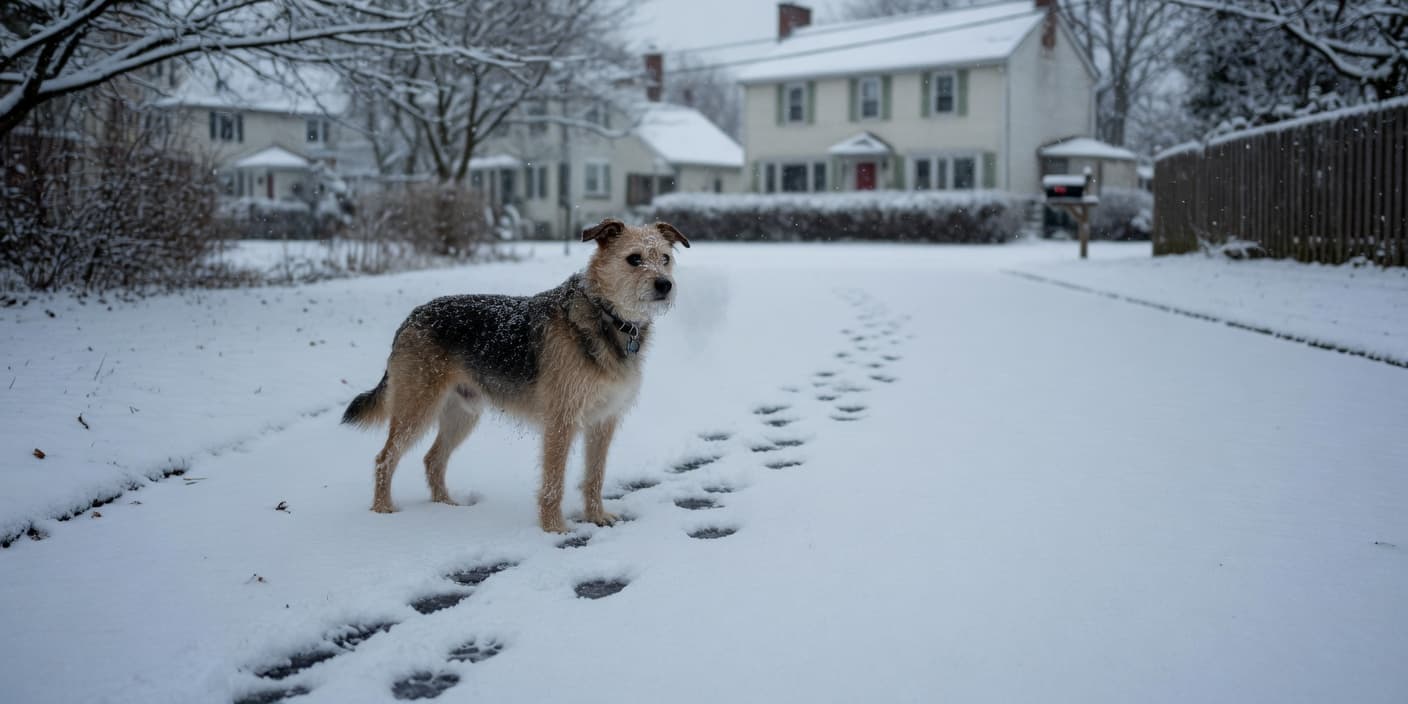
A pet missing in freezing weather feels like a countdown. It is one — but a slower one than most owners fear, and winter hands you advantages no other season does. Cats and dogs go looking for warmth the moment they get cold, and warm places can be listed and worked through one by one. Fresh snow writes down where your animal walked. And in cold weather most animals stay closer to where they went missing. Search harder, not hopelessly.
How long can a lost pet survive in winter?
A healthy adult cat or dog that finds shelter can survive days to weeks in freezing weather. The limiting factor is almost always water, not food and not the temperature itself. Animals hole up in the first insulated space they find: a cellar, a garage, a barn, a woodpile, the void under a deck. What harms them is not cold on its own but cold without shelter — especially with a wet coat or in wind. So the real question in winter is never whether your pet can hold out, but which warm spot it picked.
How cold is too cold?
There is no single cut-off — it is the combination of temperature, wind, wet, and the animal itself. As a rough guide: below about 7 °C (45 °F), small, thin-coated, very young, old, or sick animals lose heat faster than they produce it. Below 0 °C (32 °F) any pet without shelter is at real risk, and from around −7 °C (20 °F) frostbite on ear tips, tail tip, and paw pads becomes likely within hours.
- A wet coat is the single biggest risk factor: soaked fur insulates almost not at all — falling into a stream or through ice is an emergency.
- Wind cools far faster than the thermometer suggests; sheltered corners are what keeps an animal alive, which makes them your search area.
- Small animals cool faster than large ones, short coats faster than thick ones, puppies, kittens, and seniors faster than healthy adults.
- Frozen ground pulls heat out: an animal lying on something insulating — straw, leaves, wood, cardboard — lasts dramatically longer.
If you find your pet badly chilled — no longer shivering, dull, breathing shallowly — that is a veterinary emergency. Wrap it in dry, hand-warm towels, lay it on something insulating, and drive to the clinic straight away. Do not rewarm fast with a heat pad, hot water, or a hairdryer: rewarming too quickly is dangerous.
The warm hiding spots — work this list first
In winter your search area is smaller and your list is finite, and that is genuinely good news. Cats barely travel in the cold; most are found within 500 metres of home, and in hard frost usually inside the first 100 to 300 metres. Go door to door and ask to look yourself — just asking is not enough, because neighbours don't know what they are looking for or how silent a frightened animal is.
- Engine bays, wheel arches, and under-bodies of parked cars — the warmest place on the whole street.
- Garages, garden sheds, cellars, crawl spaces, boiler and laundry rooms, open basement windows and light wells.
- Barns, stables, hay and straw stores, carports, workshops, and site containers.
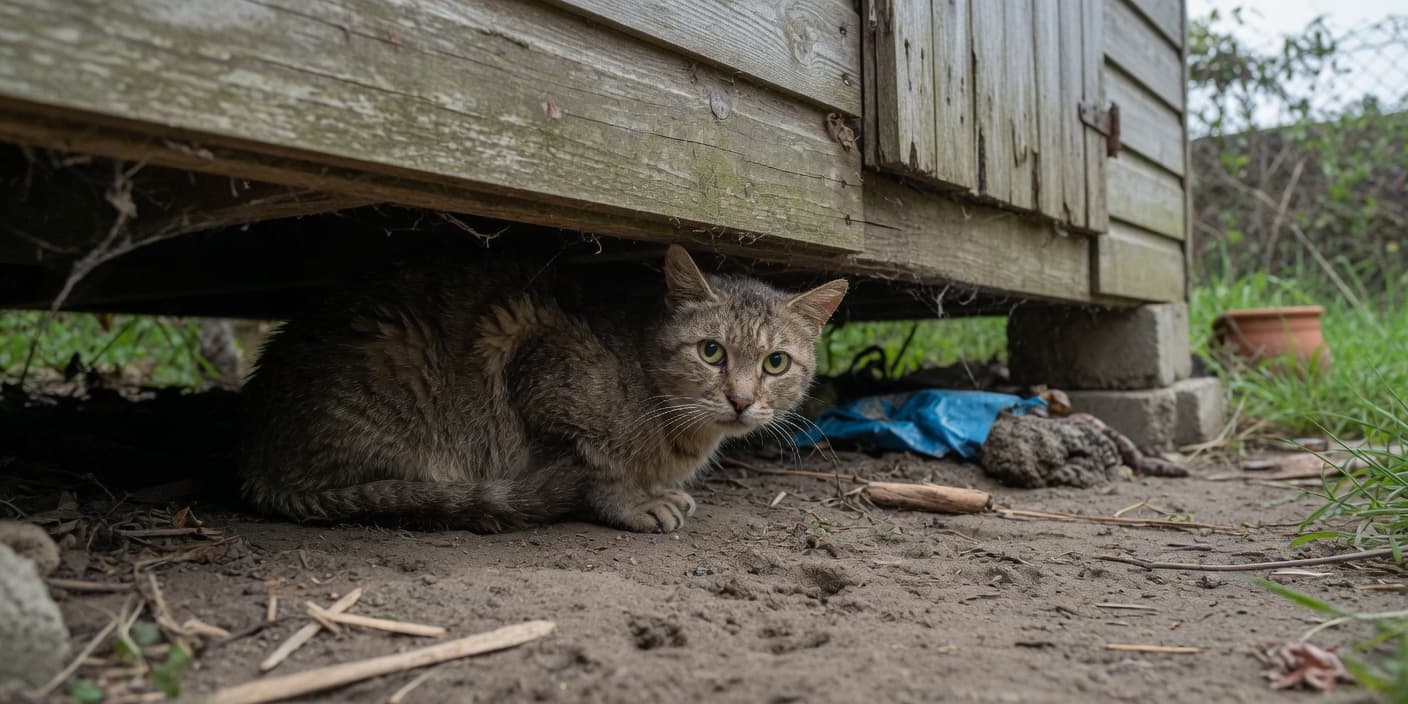
- Voids under decks, porches, steps, sheds, and stacked firewood.
- Greenhouses and polytunnels, covered garden furniture, barbecue covers, open car boots, and caravans.
- Warm-air outlets of heat pumps, vents, utility cabinets, and heated meter boxes.
Track them in the snow
Winter is the only season that writes down where your pet went. Use that systematically:
- Go out in the first one to two hours after fresh snowfall, ideally at first light — after that, traffic, dogs, and pedestrians overwrite everything.
- Cat tracks: round prints roughly 3 to 4 centimetres (about 1.5 inches) across, no claw marks, set almost in a single line because the hind paw lands in the front paw's print.
- Dog tracks: oval, claws visible, a wider and more scattered trail, often with loops and detours.
- Photograph one clean print with a coin beside it for scale, so a vet or an experienced tracker can tell you what made it.
- Follow the line in the direction of travel and watch where it ends: at a house wall, under a shed, at a basement window. A trail that stops at a building almost always means the animal went inside.
Careful in a thaw: prints that melt and refreeze grow larger and lose their outline — a print that looks far too big can still be your cat's. Re-walk the same route after every new snowfall; fresh tracks in the same place are the best proof you have that your pet is still nearby.
A feeding station that doesn't freeze
A feeding station is your most powerful winter tool: it holds the animal in the area, it gives you proof through a trail camera of where it is, and it can genuinely keep it alive. Set it up at the last confirmed sighting, sheltered from wind against a wall or hedge.
- Water matters more than food: every open source is frozen. Top up with hand-warm water morning and evening, or use a heated bowl; a deep, narrow bowl freezes far slower than a shallow one.
- Strong-smelling wet food, slightly warmed — scent carries less far in cold air, so warming it is not a gimmick.
- For shelter, use a plastic storage box with a hole about 15 centimetres (6 inches) wide, filled with straw. Never blankets, towels, or hay: they soak up moisture and freeze into a sheet of ice.
- Run your trail camera on lithium batteries — alkalines collapse within days in freezing temperatures.
- Do not put food out anywhere else nearby, and ask neighbours not to either: a well-fed animal stops turning up reliably.
Keep hunting for eyewitnesses in parallel. People spend less time outdoors in winter, but they do look out of the window. With PawAlarm your missing report reaches exactly the residents around the last sighting as an ad on Facebook and Instagram, and every reply shrinks your search area. Also report your pet to local shelters and to the microchip registry, and check that your phone number there is current. Winter is unforgiving, but it is also predictable: warmth, food, water — that is where your pet is.
Frequently asked questions
- How long can a cat survive outside in winter?
- A healthy adult cat that finds a dry, wind-sheltered spot can survive several days to weeks — cats are remarkably good at this. It turns critical without shelter, with a wet coat, or when no liquid water is reachable. That is why a feeding station with warm water plus a sweep of cellars, garages, and barns are the most effective first moves.
- Can a lost dog survive a night in the snow?
- A healthy medium or large dog with a thick coat usually gets through a freezing night fine if it curls up out of the wind — often under trees, in thickets, under vehicles or decking. Small, thin-coated, old, young, or injured flips that picture, and then hours matter. Search sheltered hollows, woodland edges, barns, and sheds around the last sighting first.
- How cold is too cold for a pet to be outside?
- Below about 7 °C (45 °F) it gets risky for small, thin-coated, very young, old, or sick animals; below 0 °C (32 °F) it is risky for any pet without shelter. From around −7 °C (20 °F) frostbite on ears, tail, and paws becomes likely within hours. Wind and a wet coat push every one of those thresholds much higher.
- Do cats hide in car engines in winter?
- Yes — in cold weather an engine bay is one of the most common places lost cats are found. It stays warm for hours after a drive, and cats reach it through the wheel arches. Bang on the bonnet, sound the horn once, and wait 30 seconds before starting any car, and ask your neighbours in writing to do the same.
- Does snow make it easier to find a lost pet?
- Yes, considerably. Fresh snow shows direction of travel, size, and gait, and it reveals where a trail ends at a building — meaning the animal went in. The first one to two hours after snowfall are the most informative, before traffic and pedestrians overwrite everything.
You might also like
How Long Can a Lost Cat Survive? Food, Water, Weather
Cats survive outdoors for days to weeks — water, not food, is the limiting factor. What that means for your search, and when the clock really is against you.
7 min read

Lost Dog: What to Do in the First 24 Hours
A calm, step-by-step action plan for the first 24 hours after your dog goes missing.
7 min read

Where Do Lost Cats Hide? (Closer Than You Think)
Why a lost cat usually sits silently nearby — and how to search methodically in the small radius where it's actually hiding.
8 min read

Thermal Drone Search for a Lost Dog or Cat: When It Actually Works
What a thermal camera can and cannot see, where to find a pilot, and how not to flush the animal you have just found.
7 min read