How Long Can a Lost Cat Survive? Food, Water, Weather
Published · 7 min read
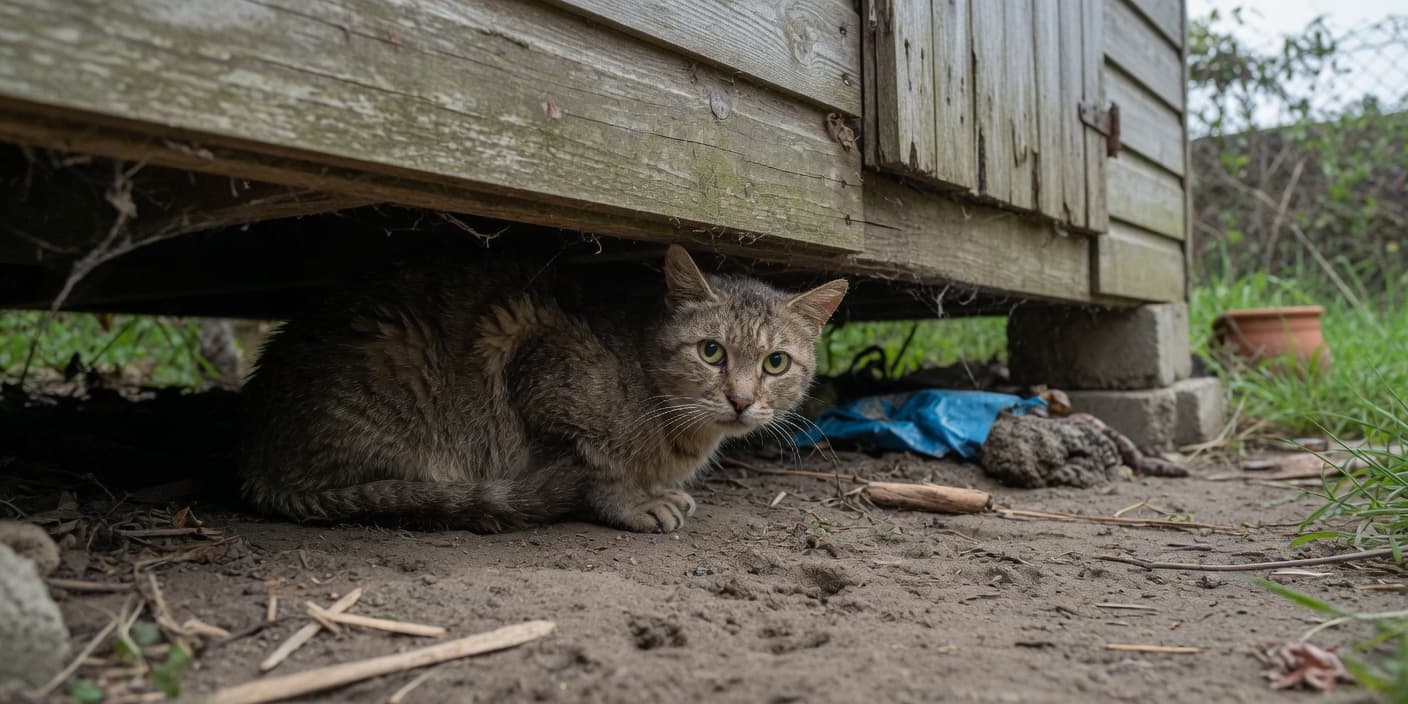
The short answer: days to weeks. A healthy cat can go roughly one to two weeks on little or no food, and cats are regularly found alive six to eight weeks after going missing. The genuinely limiting factor is water, not food — with no fluids at all, three to five days becomes life-threatening. Outdoors, almost every cat finds water in puddles, dew, garden ponds or condensation. It gets dangerous where there is none: shut inside a shed, a garage, a cellar. Which is why the most useful question is not how long, but where.
How long can a cat go without food and water?
Without water: around three to five days before severe dehydration and kidney damage set in. Without food: one to two weeks if water is available. One important caveat applies to overweight cats — if one stops eating entirely for several days, it can develop hepatic lipidosis (fatty liver), a serious condition. That is a reason to see a vet after the reunion, not a reason to panic during the search.
In practice, a lost cat almost never starves. It finds water and food even if it has never had to hunt in its life:
- Water: puddles, dew on grass, gutters, garden ponds, dripping outdoor taps, plant saucers, condensation on metal.
- Food: mice, fledgling birds, insects, compost heaps, open bin bags, cat and bird food left out on patios.
- Hunting and scavenging are instinct, not training — even an indoor-only cat switches them on after a day or two outside.
Can an indoor cat survive outside?
Yes — but it behaves completely differently from an outdoor cat. An escaped indoor cat does not roam; it freezes and hides, usually within a few houses and almost always inside a radius of about 500 metres. It becomes nocturnal, goes silent, and often will not respond to your voice for days. That behaviour is alarming to watch, but it is exactly what keeps it alive. The real risks are therefore rarely hunger: they are roads, dogs, territory fights with resident tomcats — and being shut in somewhere by accident.
What actually decides survival
Whether a cat lasts days or weeks depends less on its experience than on these factors:
- Weather: wet and wind are more dangerous than cold alone. In frost a cat needs a dry, reachable cavity; above 30 °C (86 °F), shade and water matter within hours.
- Age and health: kittens, very old cats, chronically ill cats and cats recovering from surgery have a far shorter window — count in days, not weeks.
- Medication: diabetes (insulin), thyroid, heart or seizure medication makes every day critical. Tell your vet the cat is missing.
- Shelter: a cat with a dry hiding place — woodpile, carport, cellar shaft — lasts considerably longer than one in the open.
- Shut in: with no access to water the clock runs fast. Most cats found alive after weeks were not locked in the whole time.
Cats found alive after weeks
Recoveries after four, six or eight weeks are not freak stories; they are routine in lost-pet work. Two patterns repeat. Either the cat was shut in and was discovered when someone finally opened the shed, garage or cellar — or it settled within a few hundred metres and was drawn back in by a feeding station. Almost all of these cats were found very close to home.
Expect a very thin, rough-looking cat at the reunion — ten to twenty percent weight loss is normal. Go to the vet the same day, and do not simply put down a big bowl: after a long fast you feed small portions spread across the day, or you risk vomiting and dangerous refeeding effects.
What this means for your search
- Do not stop after a week. The biological window is much longer than the window in which most people keep searching.
- Get sheds, garages, cellars, summer houses and caravans within 500 metres genuinely opened — not just glanced at.
- Set up a food and water station at the last sighting and check it at first light; worn clothing or the used litter tray beside it strengthens the scent anchor.
- Confirm with a trail camera that it really is your cat before you invest whole nights — and only then set a humane trap.
- Keep your reports and microchip details current: shelter, local vets, animal rescues and the microchip registry.
And the most important point: your cat does not need a perfect search, it needs one that does not stop too early. With PawAlarm your appeal runs as a Facebook and Instagram ad aimed at the people living around the last sighting — the ones who can open the shed that matters. Every week you keep going is another week in which your cat can still be found.
Frequently asked questions
- How long can a lost cat survive without food and water?
- Without water, three to five days becomes life-threatening; without food, a healthy cat can last one to two weeks. Outdoors almost every cat finds some water, so starvation is rarely the cause of death. The dangerous scenario is a cat shut in somewhere with no access to water at all.
- Can an indoor cat survive outside?
- Yes. Hunting and hiding instincts are innate and kick in after a day or two outdoors. But an indoor cat does not roam — it hides silently very close by, usually within a few houses. Search near, quietly, and at dawn and dusk rather than covering large distances.
- Are cats scared when they are lost?
- Yes. A displaced cat goes into survival mode: it hides, stays silent, and often will not respond to its own name for days. That does not mean it no longer knows you. Call calmly in a normal voice, never chase it, and sit quietly at the feeding station instead.
- How long should I keep looking for my lost cat?
- At least several weeks. Cats are regularly recovered six to eight weeks after disappearing, often only a few hundred metres from home. Keep the feeding station, the posters and your online alert running — a single new sighting can change everything.
- Will a lost cat find its way home on its own?
- Many outdoor cats do, often within a few days. A frightened or transported cat frequently cannot, because in survival mode it does not move — and indoor-only cats almost never do. So do not rely on waiting: work with scent anchors and a feeding station instead.
You might also like

Cat Missing for 2 Days? What's Normal, What to Do, and When to Worry
What it means when your cat has been gone for days, how likely it is to come back on its own, and a day-by-day plan to bring it home faster.
7 min read
Chances of Finding a Lost Cat: 24 Hours, 3 Days, a Week
Around three out of four lost cats come home, and most were never far away — here is how the odds change day by day and what actually improves them.
7 min read

How to Trap a Lost Cat: Humane Trap Guide That Works
When a humane trap is the right move, how to set and bait it correctly — and how to catch even a trap-shy cat safely with a drop trap and patience.
7 min read

Lost Pet in Winter: How Long They Survive the Cold
How long cats and dogs survive freezing weather, the warm hiding spots to work through first — and why winter actually makes the search easier.
7 min read