Dog Escaped From the Car After an Accident or at a Rest Stop
Published · 7 min read
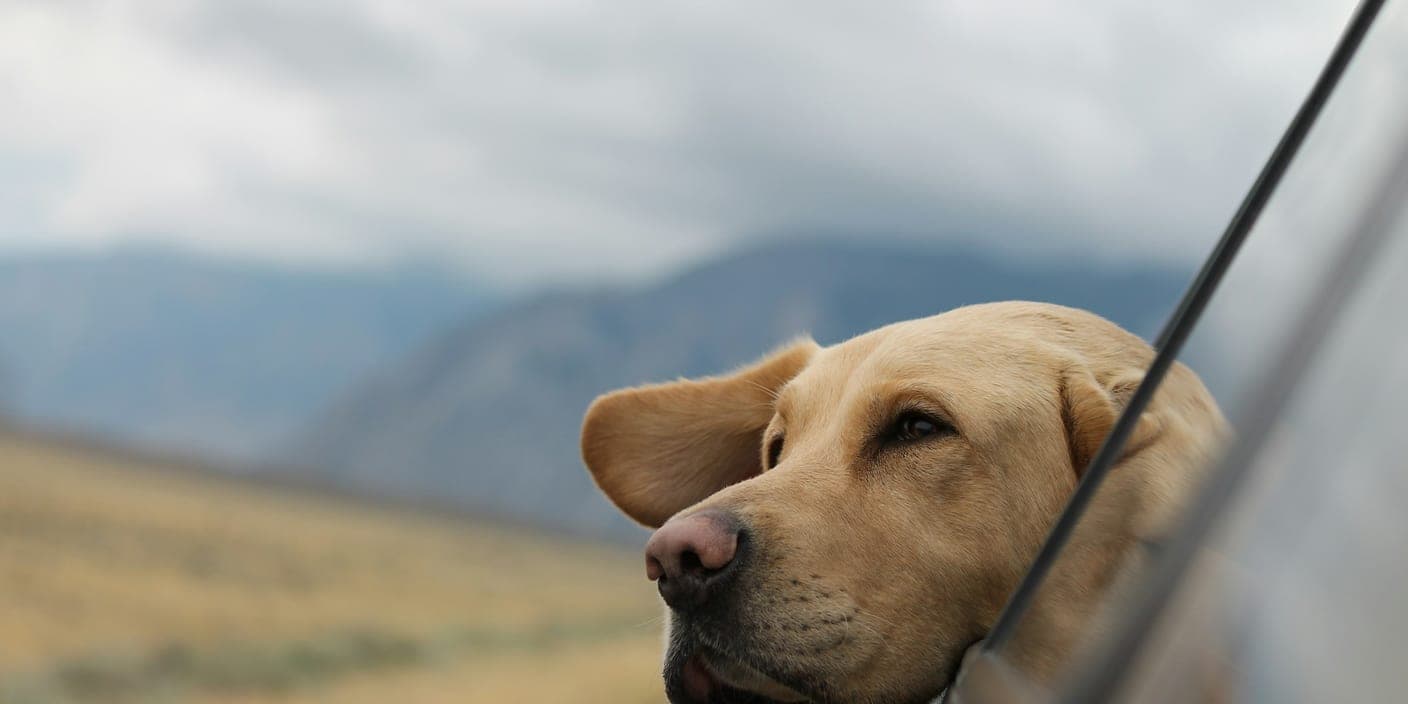
A crash, a door opened too early at a service area, a window down a hand too far: a dog that escapes from a car is suddenly somewhere it has never been — often hundreds of kilometres from home, sometimes hurt. It cannot navigate home from there. What it has: the car, you, and the people nearby.
After a crash: adrenaline first, injuries later
A dog thrown around in a collision runs on pure adrenaline: out through the broken window, kilometres without feeling a thing — only then does it slow down, limp and creep under cover. Assume it may be injured, and search the sheltered edges, not the open road.
- Tell the police and paramedics at the scene straight away that a dog is missing and have it written into the accident report; ask the tow-truck driver and highway crew too, they drive that stretch daily.
- Never walk onto the carriageway; on a motorway you search from the outside — behind the barrier, from access roads, bridges and the fields alongside.
- Search the edges within two to three kilometres (one to two miles): embankments, culverts, hedgerows, under bridges, field margins, barns, the first gardens of the nearest village — a hurt dog seeks the nearest dark hollow.
- Come back to the crash site again and again, especially at dusk: dogs look for the last place they saw their people, often only once the sirens and traffic have gone.
Escaped at a service area or a car park far from home
A dog that slips away at a motorway services or a hotel car park 300 kilometres (200 miles) from home has no map in its head: nothing is familiar, so it heads nowhere in particular and hides close by. The car and you are the only things here it knows.
- Stay. One person remains with the car, doors open, engine off, and does not drive around looking; many dogs come back once the site goes quiet.
- Put worn clothing, the dog's blanket, water and strong-smelling food on the ground beside the car — not scattered across the car park.
- Ask the restaurant and petrol-station staff, truck drivers and travellers, and leave your number at the counter — truckers see the site's edges at 4 a.m.
- Walk the perimeter slowly: behind the buildings and bins, the picnic area, the ditch by the fence, the woodland strip.
- Note the service area, direction of travel and exact spot as a GPS pin. If you must move on, leave blanket, water and food where the car stood and return at dawn.
Jumped out of the window or the door close to home
A dog that leaps out at traffic lights or bolts from a car park in your own town knows the area and often heads for home. Treat it like any scared runaway: quiet, widening circles from the spot, someone at home with the door open; the guide on scared runaway dogs covers that pattern.
Who needs to know: the information loop on the spot
Far from home nobody knows your dog; you build that network yourself in the first hour. A dog near a motorway is almost always picked up by someone who works or lives there, and an injured dog ends up at the nearest vet. Log every call.
- Report the dog missing to the local police, with the exact spot; 112 (911 in North America) only if it is on the carriageway endangering traffic.
- Ring every vet within 15 to 20 kilometres (10 to 12 miles) and email a photo: the dog may be injured, and you will pay.
- Report it to the local shelter and to your microchip database, and check that your mobile number there is current.
- Inform the highway operator and the service-area management; in rural country also hunters, foresters and farmers, who are out at dusk.
- Post in the Facebook groups of the nearest towns (photo, exact spot, time, and one request: report, do not chase), and run a targeted alert around the escape point: PawAlarm shows your dog's photo as Facebook and Instagram ads to the people who live and work right there, even in a village you have never set foot in, plus a printable poster for the services and vets.
Hurt or in survival mode, the dog will not come to you
After a crash, or a night or two alone, many dogs switch into survival mode: hide by day, move at dusk, flee from every human, including their own. A dog in pain, even more so.
- When you see the dog, stop. Sit sideways, look away, toss food and wait, an hour if necessary. Helpers only report where it is; nobody tries to catch it.
- Set up a feeding station where it was last seen or where the car stood: food, water, your clothing, checked once a day; after the first night borrow a humane trap and trail camera.
- Trust callers who name the spot, time, direction and a detail from the photo; doubt a sighting 30 kilometres away on day one, or a dog that supposedly ran up to someone.
- Ask every credible caller: is the dog moving normally? A limp or a dog lying in the open changes the plan: vet and rescue come first.
The full method is in the guide on catching a scared lost dog.
Prevention for the next drive
Almost every escape from a car happens at a door or a window — and almost all are prevented by routine, not equipment.
- A crash-tested harness clipped into the seat belt, or a crash-tested crate in the boot: a loose dog is the first thing out of a broken window.
- Child locks on the rear doors and the window lock on the driver's panel, so a paw on a switch opens nothing.
- Leash on before the door opens — every time, including at the petrol station: hand on the leash, then the handle.
- A practised wait cue at the car door: train it in the driveway until the dog stays seated with the door open and gets out only on your word.
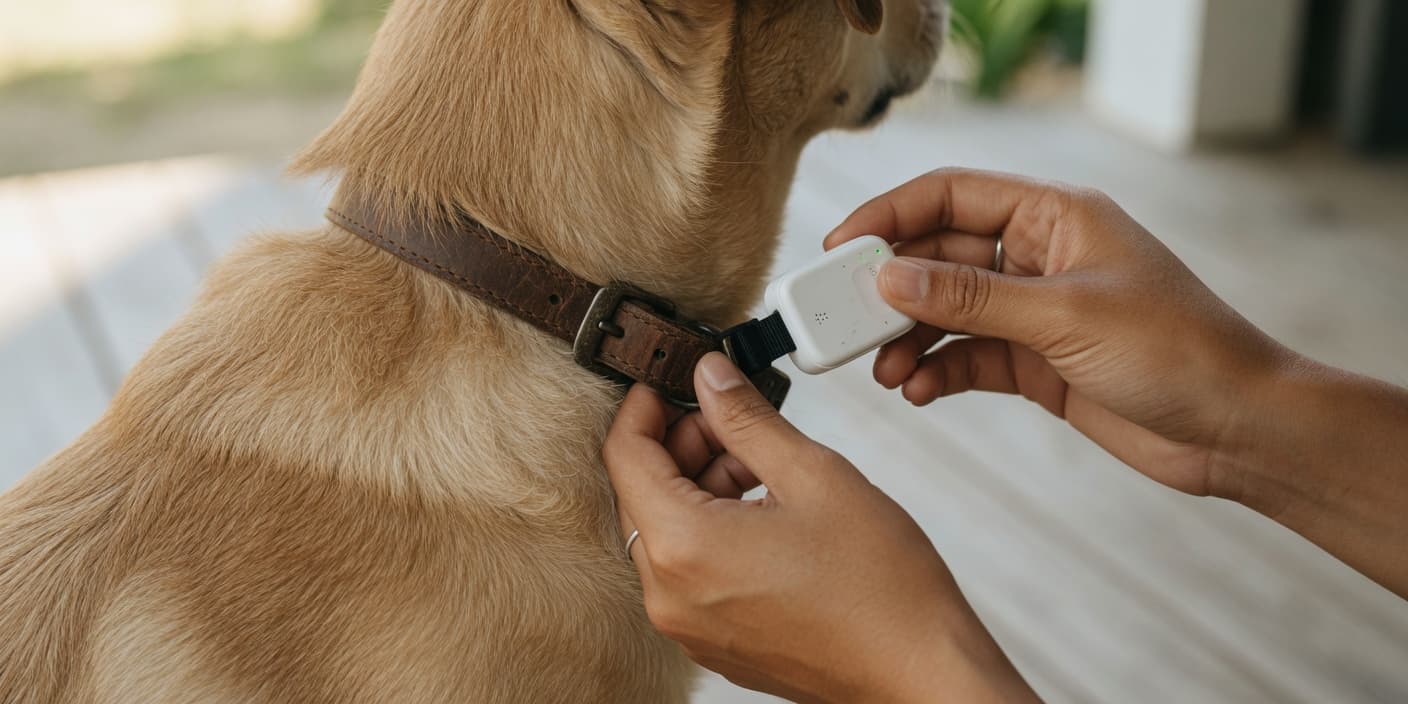
- A tag with your mobile number, a current chip registration and, on long trips, a GPS tracker: in unfamiliar country a dot on your phone beats any poster.
Nobody plans for a crash, but everyone can plan for the door.
Frequently asked questions
- My dog ran away after a car accident — where do I look first?
- Along the sheltered edges within two to three kilometres: embankments, culverts, hedges, under bridges, field margins — never on the carriageway. And back to the crash site repeatedly, especially at dusk: dogs look for the last place they saw you.
- Can a dog run off after a crash even if it is injured?
- Yes. Adrenaline masks pain: a dog can run for kilometres on a fractured leg or with internal injuries before it collapses and hides. Search close, low and quiet, and take even an apparently unhurt dog to a vet that day.
- Will my dog come back to the car at a rest stop?
- Often, yes, if the car stays and it gets quiet — it is the only thing the dog knows here. Leave someone with the car, doors open, blanket, water and food on the ground; many dogs reappear within hours.
- Who do I call when my dog gets lost on the motorway?
- The police at the scene and the local police, the highway operator, every vet within 15 to 20 kilometres, the local shelter and your microchip database; 112 (911 in North America) only if the dog is on the road.
- How do I stop my dog escaping from the car again?
- A crash-tested harness or crate, child locks and window locks, the leash on before any door opens, and a practised wait cue at the car door. Add a tag with your mobile number and, on long trips, a GPS tracker.
You might also like

Dog Ran Away Scared: What to Do When Your Dog Bolts in Panic
Why panicked dogs run blind and far — and how to bring a scared dog home instead of accidentally driving it further away.
8 min read
How to Catch a Scared Lost Dog That Won't Come to You
Catching is technique, not a chase: how calming signals, a feeding station, and patience bring home even a dog in full survival mode.
8 min read

Lost Dog Syndrome: Why Your Dog Runs From You
Why a frightened dog in flight mode stops recognizing even its owner — and how to calmly win it back.
8 min read
AirTag or GPS Tracker for Your Dog? What Works When It Counts
AirTag or GPS collar: which one actually brings your dog back, where each one goes silent, and why the microchip still matters most.
7 min read