Dog Lost While Hiking: How to Search the Woods the Right Way
Published · 7 min read
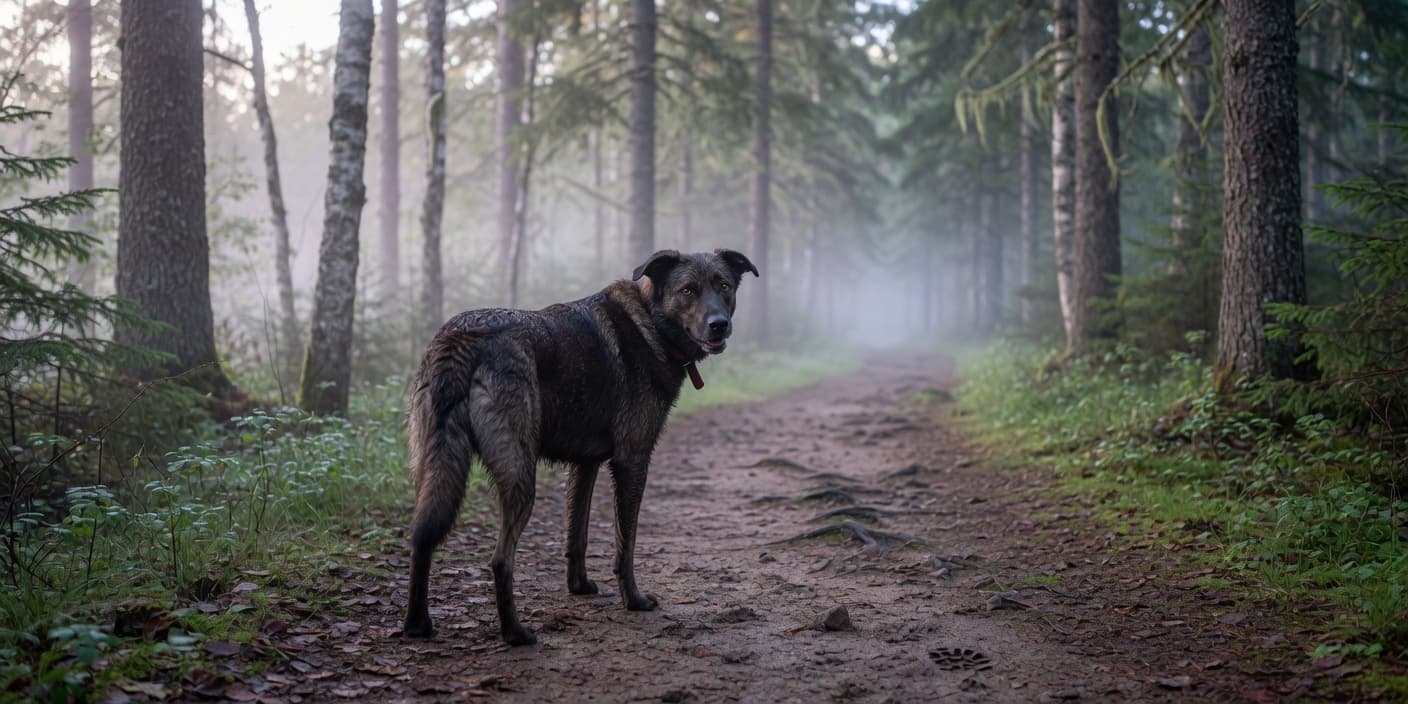
One moment your dog was on the trail ahead of you. Then a deer, a gunshot in the distance, a thunderclap — and it was gone. The woods feel different from a neighbourhood: no fences, no neighbours, no edges. But the first rule of dog recovery still holds out here: do not chase and do not shout in panic. A dog in flight mode runs from anyone who follows it — including you. Woodland searches are won with patience, scent, and one fixed point, not with speed. And the odds are better than they feel right now: around 93 percent of lost dogs are reunited with their owners.
Stay at the last-seen point — that is where your dog will look for you
The most effective thing you can do in the first hours is not leave. Dogs navigate by scent and retrace their own trail. They come back to the place where your scent trail broke off, or to the car park where the walk began. If you spend those hours searching kilometres away, you will be somewhere else exactly when your dog returns.
- Drop a GPS pin on the exact last-seen spot immediately and screenshot the coordinates — in the woods every trail junction looks the same an hour later.
- Build a scent anchor there: a T-shirt or fleece straight off your body, the dog's blanket or bed, its collar or harness. Weigh it all down with a stone.
- Add water and something that smells strong — warmed wet food, sausage, rotisserie chicken. Do not scatter food along the trail.
- Bring the car to the trailhead and leave a jacket and a water bowl beside it. A lot of hiking dogs are found sitting at the car or at the start of the walk.
- One person stays at the point permanently; everyone else fetches supplies, lights, and food.
Search the woods without wrecking the scent picture
A panicked dog does not run in a straight line, but it does take the path of least resistance: trails, forest roads, firebreaks, streams, forest edges, and meadows. That is exactly where hiking dogs turn up — on or beside a path, at a forest edge, along water, at a hut, or in a car park. Almost never deep in the thicket. So do not comb the undergrowth: you only spread your own scent in every direction and make it harder for your dog to read your trail.
- Work the trails and forest roads outward from the point like spokes, two to three kilometres out, then repeat the same loop later.
- Take a listening stop every 200 to 300 metres: call the dog's name once in a normal, calm voice — then stand completely silent for two full minutes. A jingling tag, a rustle, a whine: you only hear those in silence.
- The best windows are first light and dusk. The forest is quiet, the air carries scent, and the dog is moving.
- Do not bring a big search party. Frightened dogs avoid groups, voices, and head torches — one familiar person alone achieves more than twenty volunteers.
- Ask at every car park and mountain hut whether anyone has seen a dog on its own, and leave your number.
Tell the people who are already out in that terrain
In rural country, coverage beats the number of posters. On the same day, contact the people who see the area daily: the forestry office and rangers, the local hunters (important, so nobody mistakes a dog for game), hut wardens and mountain restaurants, farmers, forestry contractors, mountain-bike and trail-running groups, riding stables. Then the vets, the nearest animal shelter, and the found-animal desk of the surrounding villages, plus the police, who in rural areas are often where found-pet reports land. Also flag your dog as missing with your microchip registry so a scanned chip leads straight back to you.
The second lever is the residents of the nearest villages. A dog that disappears into the woods usually reappears at an inhabited edge: a garden fence, a farmyard, a compost heap. With PawAlarm your appeal reaches exactly that radius around the last-seen point as an ad on Facebook and Instagram, and you get a poster with a QR code for car parks and huts. The people who live along the forest edge and walk their own dog at dawn see your alert before you can physically get there.
Day two and beyond: a feeding station and a camera
If your dog is not back by nightfall, switch from searching to attracting. That is not a step backwards — it is how most woodland searches actually end.
- Set up a permanent feeding station at the last-seen point: strong-smelling food, water, your worn clothing, the dog's blanket.
- Point a wildlife camera at it. It tells you whether the dog comes at night and proves it is your dog and not a fox or a badger.
- Check the station once a day only, at first light. Every extra visit pushes a frightened dog further away.
- If the camera shows your dog, do not go and wait there calling it. Keep feeding until it comes reliably, then have one single familiar person sit quietly at a distance — or arrange a humane trap through a shelter or animal rescue.
- Move the station to every new confirmed sighting.
And the question that keeps you awake: how long can a lost dog survive in the woods? A healthy adult dog manages days, in mild weather even weeks, as long as it can drink — streams, puddles, and dew are enough. The real dangers are not hunger but roads, cold wet nights, injuries, and people who keep pushing it further out. So stay calm, keep the station stocked, keep the alert running. Dogs are found alive after one or two weeks all the time.
Frequently asked questions
- How long can a lost dog survive in the woods?
- A healthy adult dog can survive days to weeks in the woods as long as it has access to water — streams, puddles, and dew are usually enough. Water matters far more than food. The bigger risks are roads, cold wet nights, and injury, which is why the search should keep running: dogs are regularly found alive after one or two weeks.
- Will my dog find its way back to the trailhead or the car?
- Very often, yes. Dogs backtrack along their own scent trail and end up where the walk started or where your trail broke off. Leave something at both places: worn clothing, the dog's blanket, water and food — and if you can, somebody waiting there quietly.
- Should I leave my clothes where my dog went missing?
- Yes. A T-shirt or fleece taken straight off your body, together with the dog's blanket and bed, is the single most effective scent anchor. Put water and strong-smelling food beside it and weigh everything down with a stone. Do not scatter food along the trails — that mostly attracts wildlife.
- Should I search the woods at night?
- Dawn and dusk are the best windows. At night, quiet listening from one spot is useful, but combing the forest is not: head torches and voices drive a frightened dog further away, and you risk injuring yourself. Let a wildlife camera at the feeding station do the night shift instead.
- How far can a lost dog travel in a day in the woods?
- In the first panicked hours a dog can cover five to ten kilometres, usually along trails and forest edges. After that most dogs settle into a small area with water and cover and circle within it. Search in widening rings, but keep returning to the last-seen point.
You might also like

How Far Do Lost Dogs Travel? Set Your Search Radius Right
Temperament, what spooked them and the terrain decide how far a lost dog goes — and how to plan your search radius wisely.
7 min read
How to Catch a Scared Lost Dog That Won't Come to You
Catching is technique, not a chase: how calming signals, a feeding station, and patience bring home even a dog in full survival mode.
8 min read
Pet Lost on Holiday: What to Do at a Cottage, Campsite or Abroad
Escaped at the holiday address, missing with the sitter, or lost abroad — the plan for each, and what stays behind if you must go home first.
7 min read
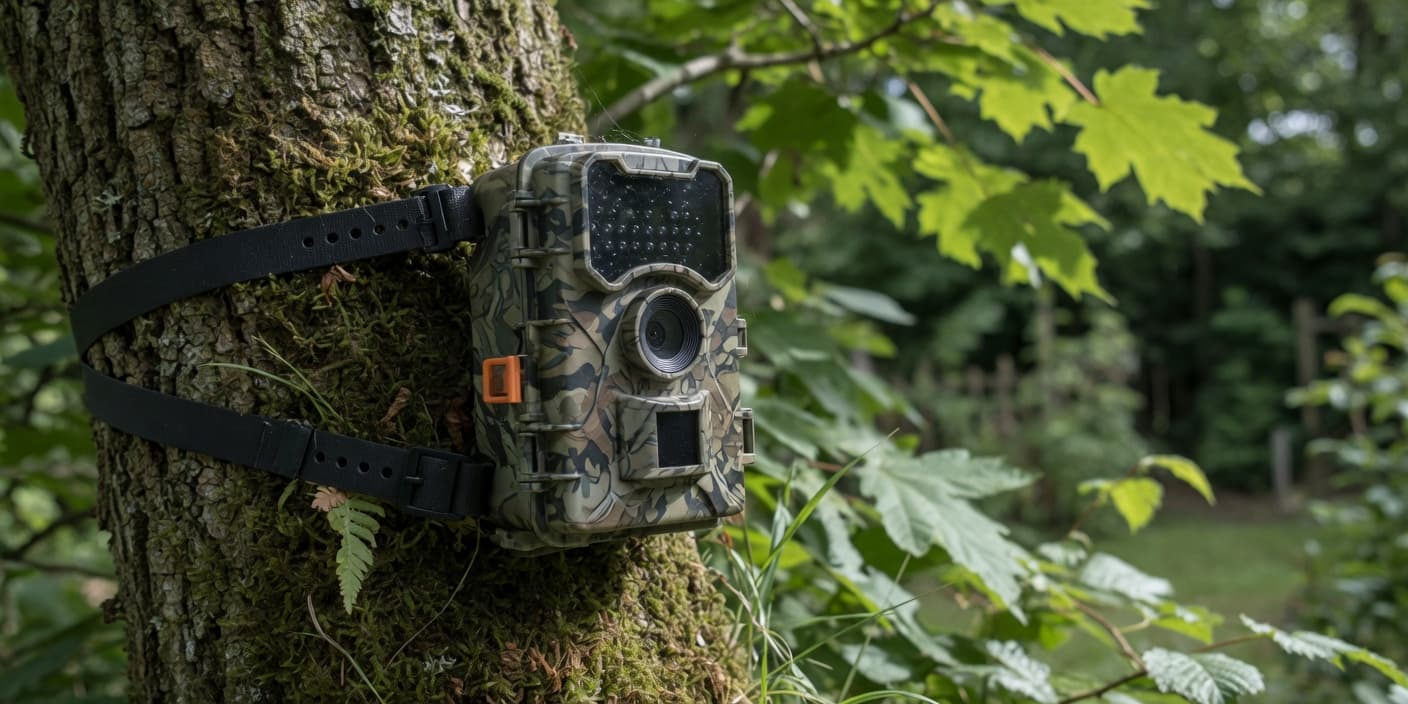
Wildlife Camera to Find a Lost Pet: Feeding Station Setup
Why a cheap trail camera is the most underused tool in pet recovery — and how to set up camera and feeding station so you get a real lead, not guesswork.
7 min read