Lost Puppy: What to Do in the First 60 Minutes
Published · 7 min read
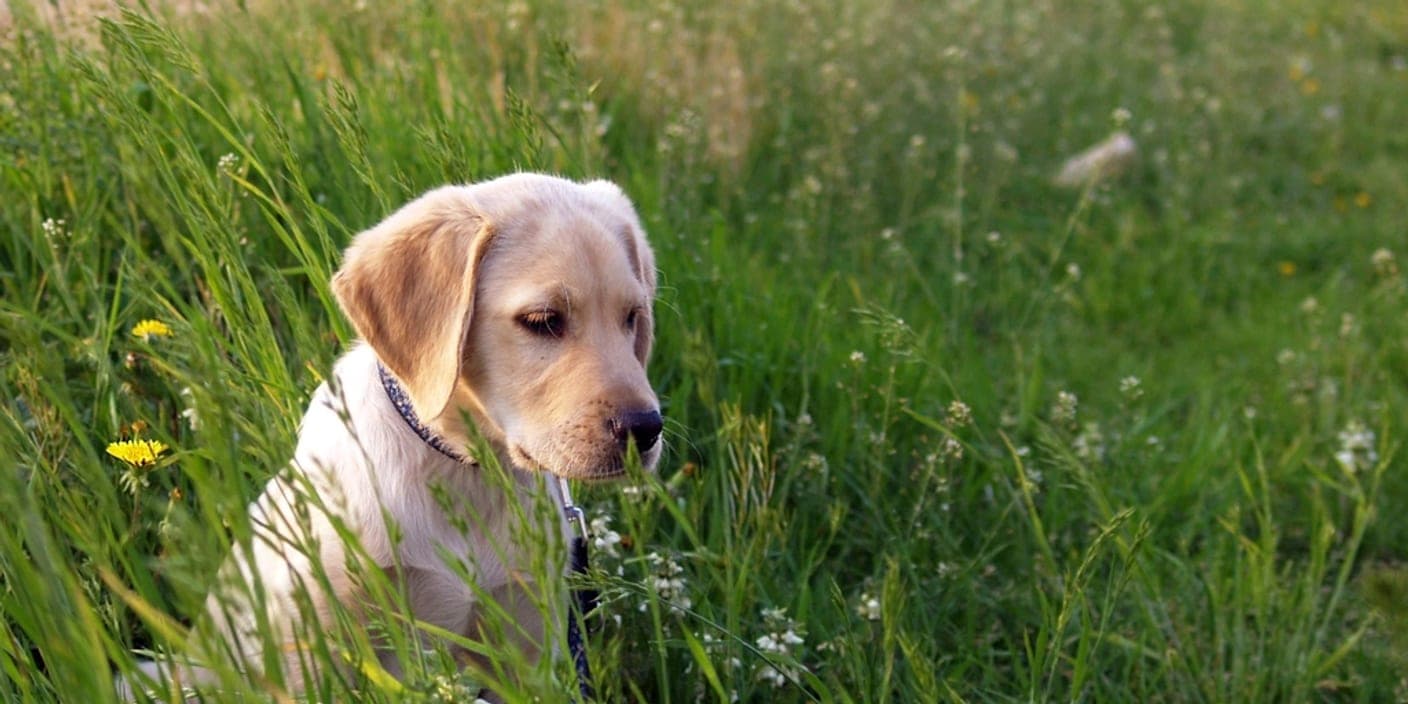
A lost puppy is not a small lost dog. An adult dog has a map of the neighbourhood, a name it answers to and the stamina to cover kilometres; a puppy has none of that. It is almost certainly within a few hundred metres (a few hundred yards) of where it slipped away, tucked into the first low, tight space it found — and it cannot keep itself warm, cool or hydrated for long. The search is smaller than you fear, and the clock is faster than you think.
Why a lost puppy is not a small lost dog
Almost everything written about lost dogs is written for adults. A puppy of a few months follows its own rules:
- It does not go far. With no territory to run back to and no urge to travel, it usually stops within a few hundred metres — often within sight of the garden gate.
- It tires within minutes. After a short burst of panic it lies down and stays there, so the puppy you cannot see is hiding, not travelling.
- It hides low and tight: under decks and porches, in hedges, under parked cars, in ditches and drain pipes, in open sheds and garages, behind bins.
- It has no recall yet and follows anyone — a child, a jogger, another dog. That makes it easy to approach and just as easy to carry off.
- It cannot regulate its temperature and dehydrates within hours. A wet puppy chills on a mild night; a puppy in a sunny shed overheats by noon.
The first 60 minutes: search close, low and quiet
Leave the car where it is. A puppy is found on foot, at knee height, by someone who is quiet. Split the jobs immediately:
- One person stays at the escape point — the open gate, the front door, the car park — with the crate, a blanket that smells of home and a bowl of water. A puppy that calms down often comes back to exactly this spot.
- Everyone else walks a 100 to 300 metre (110 to 330 yard) radius on foot, slowly and crouching, looking under cars, decks, hedges, garden furniture and trailers.
- Use a soft, high voice and the sounds the puppy already knows: the squeaky toy, the treat bag, the food bowl being tapped. Stop every few minutes and listen for whimpering.
- Bring a lure it trusts: a littermate, its mother or a calm familiar dog on a lead. Most puppies come out for another dog long before they come out for a person.
- Check every closed space: sheds, garages, cellars, bin stores, greenhouses. Ask neighbours to open theirs — a puppy that wandered in while a door was open is now shut inside.
- Walk the traffic hotspots and the water first: the nearest busy road, the car park, the pond, the ditch by the field. A puppy has no road sense at all.
Reach the people who will actually see the puppy
A puppy is found by whoever happens to be at ground level nearby. Within the first hour, tell:
- The immediate neighbours, in person. Ask them to check gardens, sheds and garages right now and to keep gates closed afterwards.
- The people who are outside anyway: dog walkers, joggers, delivery and postal drivers, bin crews, the school run. Show them the photo on your phone.
- Children and their parents. Children are the most likely to pick up a puppy, carry it home and ask to keep it — a message to the school or nursery group costs nothing.
- Vets and shelters within a few kilometres (a couple of miles), plus animal control (US/CA) or the council dog warden (UK/IE). Ask them to scan any puppy handed in and to note your number.
- Your microchip registry — if the puppy is chipped and enrolled at all. Many puppies are still registered to the breeder or the rescue, or the chip was implanted but never registered. Call the breeder or shelter today so they forward any call; in the US and Canada the AAHA Universal Pet Microchip Lookup shows which registry holds the number, in Europe Europetnet does.
Then post in the local lost-and-found groups and put the photo in front of the people who never open them. PawAlarm shows your puppy's photo as targeted Facebook and Instagram ads to the people living around the spot where it went missing, and gives you a printable poster for the lamp posts and shop windows on the same streets. The puppy under a car three doors down is found by the person who lives in that house — the alert is how they learn it is yours.
Puppy-specific risks — and what the poster must say
An adult dog's dangers apply to a puppy too, but three of them arrive much faster, and one is purely human.
- Cold. A small, wet puppy loses body heat within an hour or two, even on a mild night. Hypothermia makes it quiet and still — exactly why it stops answering.
- Heat and thirst. On a warm day a puppy in a locked shed, a car or on hot asphalt is in trouble within hours, and it cannot find water on its own.
- Traffic. A puppy sits down in the road and freezes at headlights. If it is on or beside a busy road, do not chase it into the lane — call the emergency number (911 in the US and Canada, 112 across Europe) and ask for the traffic to be slowed.
- Well-meaning finders. A puppy alone reads as ‘dumped’, not ‘lost’. People keep it for the night, decide it was abandoned, and a week later it has a new name. Nobody thinks of a chip scan for such an obviously homeless puppy.
Word the poster so a finder brings it home
Every line of the poster and the alert should fight the ‘dumped puppy’ story. Make the headline ‘Lost family puppy’, not ‘lost dog’. Give its age in weeks or months and its name, and say it is not yet fully vaccinated and needs its course — that tells a finder it has an owner and a vet. Add ‘badly missed by two children’ if that is true, state that it is chipped or wears a tag, and ask whoever has it to take it to any vet for a free chip scan or to call you first. A clear photo with something for scale — a hand, a shoe — beats the cutest one.
After you have it back: vet check first, then close the gaps
The reunion is not the end. A puppy that has spent hours or a night outside needs the same-day checks an adult would shrug off:
- Warm it slowly with a blanket and your body heat, not a hot-water bottle on the skin. Offer water in small portions every few minutes, not a bowl it gulps and brings back up.
- Feed a small meal, not a big one, and watch for vomiting, diarrhoea or lethargy over the next day.
- See the vet the same day or next morning: dehydration, ticks, cut pads, a limp from a fall, anything swallowed — and a chip scan to confirm the number reads.
Then fix what let it happen:
- Walk the fence at puppy height, on your knees. A gap a hand fits through is a gap a puppy fits through; check under gates and behind sheds.
- Double up at doors: harness plus collar, or the lead clipped on before the door opens. Most puppy escapes happen through a front door held open for a visitor.
- Put a tag with your phone number on the collar from the first day home, and register the microchip in your own name now — a puppy's chip is often still filed under the breeder or the rescue.
- Start recall training in the garden this week, always rewarded, and keep the puppy on a long line outside until the recall is reliable.
If the puppy is still out there while you read this: put one person at the escape point, send everyone else out on foot — and get the photo in front of the neighbours while the search is still small.
Frequently asked questions
- How far does a lost puppy go?
- Usually only a few hundred metres. A puppy has no territory to head for and no stamina, so it runs until the panic fades and then hides in the first low, tight space it finds — under a car, a hedge, a deck or in a shed. Search close and low before you widen the radius.
- Will a lost puppy come back on its own?
- Sometimes, but do not count on it. A puppy of a few months has no map of the area and cannot navigate home; the ones that turn up at the door usually never left the street. Leave the gate open with the crate and blanket at the escape point, keep someone there, and search actively on foot.
- How long can a puppy survive outside on its own?
- Much less time than an adult dog, and it depends on the weather more than anything. A puppy cannot regulate its temperature well: a wet, cold night or a hot afternoon without water becomes dangerous within hours. Treat a missing puppy as urgent from the first minute, day or night.
- My puppy is not chipped yet, or the chip is still registered to the breeder — what now?
- Call the breeder or rescue today and ask them to forward any call about the chip to you and to flag the puppy as missing with their registry. Tell every vet and shelter nearby that a found puppy may scan to someone else's name. Then lean on what needs no registry: an ID tag, posters and an alert with the photo.
- Someone found my puppy and wants to keep it — what can I do?
- Stay calm and polite, and bring proof: the vaccination card, the breeder or adoption contract, photos on your phone, the chip number. Ask them to take the puppy to any vet for a scan. If they refuse, involve the police non-emergency line and the local shelter rather than confronting them yourself.
You might also like

Lost Dog: What to Do in the First 24 Hours
A calm, step-by-step action plan for the first 24 hours after your dog goes missing.
7 min read
How to Catch a Scared Lost Dog That Won't Come to You
Catching is technique, not a chase: how calming signals, a feeding station, and patience bring home even a dog in full survival mode.
8 min read
Newly Adopted Dog Ran Away: The First-72-Hours Playbook
A just-adopted dog has no bond to your home yet — it behaves like a stray from minute one. Here is the plan that gets it back.
8 min read

How to Prevent Your Pet From Getting Lost
A microchip, an ID tag, and a few habits dramatically cut the odds your pet ever goes missing — and prepare you for a fast reunion if it does.
7 min read