How to Find a Lost Cat: A Step-by-Step Search Plan
Published · 9 min read
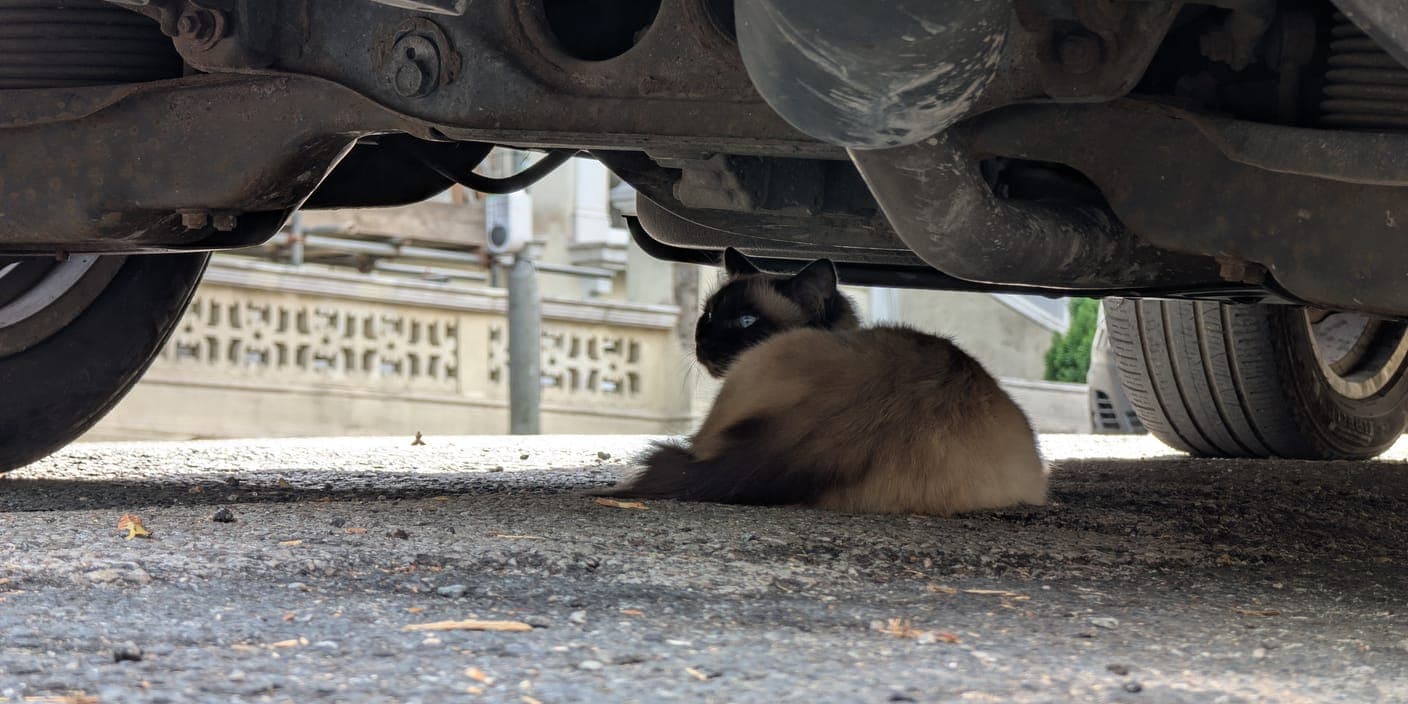
To find a lost cat, search close to home first: a missing cat is usually hiding silently within a few houses of where it got out, not roaming across town. Search slowly and quietly after dark with a torch, ask your neighbours to let you check their sheds, garages and cellars, and put familiar scents such as the used litter box by your door. Then tell vets, shelters and your microchip registry, put up posters and keep the routine going for days and weeks, because many cats only reappear after several days.
This guide is the complete method, from the first evening to the weeks after. If your cat went missing in the last few hours, work through the first-24-hours checklist first, then come back here for the full plan.
Step 1: Search close to home, because lost cats hide rather than roam
Lost cats and lost dogs behave in opposite ways. A dog travels; a frightened cat looks for the nearest dark, tight space and freezes there, often for hours or days and without a sound. Its instinct says that silence and stillness keep it safe from predators, so it may not answer even when you are standing right next to it. That is why loud, wide searches so often fail, while a slow search of the nearest houses finds so many cats.
- Indoor cats that slipped out usually stay closest of all, often within two or three houses of the door they escaped through.
- Outdoor cats know their territory, but an injured, frightened or shut-in cat can still be only a few gardens away.
- Typical hiding places: under decks and steps, in dense hedges and shrubs, behind woodpiles, in crawl spaces, under parked cars, and in sheds, garages and cellars.
- Many missing cats get shut in by accident, when someone closes a shed or garage without noticing that a cat slipped inside.
Picture a circle of a few houses around your home or the place your cat was last seen, and search it thoroughly before you widen it. Look low and deep rather than at eye level, and shine your torch into every gap a cat could squeeze into.
Step 2: Search after dark, slowly and quietly
While the street is busy, a hiding cat barely moves. It comes out when everything goes quiet: late in the evening, in the small hours and around dawn. Search then, alone or with one calm helper, and let the silence work for you.
- Take a strong torch and hold it close to eye level. A cat's eyes reflect the light as two bright points, even deep under a hedge or a car.
- Walk slowly, stop often and call softly in the voice your cat knows. Then stay silent for 30 to 60 seconds and listen: a frightened cat may answer only once, very quietly.
- Shake the treat bag or tap a food tin. Sounds your cat links with food often work better than its name.
- Walk the same route at the same times every night. A cat that didn't dare come out yesterday may do so tonight.
Step 3: Bring your cat home with scent, food and a feeding station
Your cat's nose leads it home more reliably than your voice. Make your home smell like home from the outside too, and give a hungry cat a reason to keep coming to the same spot.
- Put the used, uncleaned litter box outside your door, with unwashed bedding or a piece of clothing you have worn.
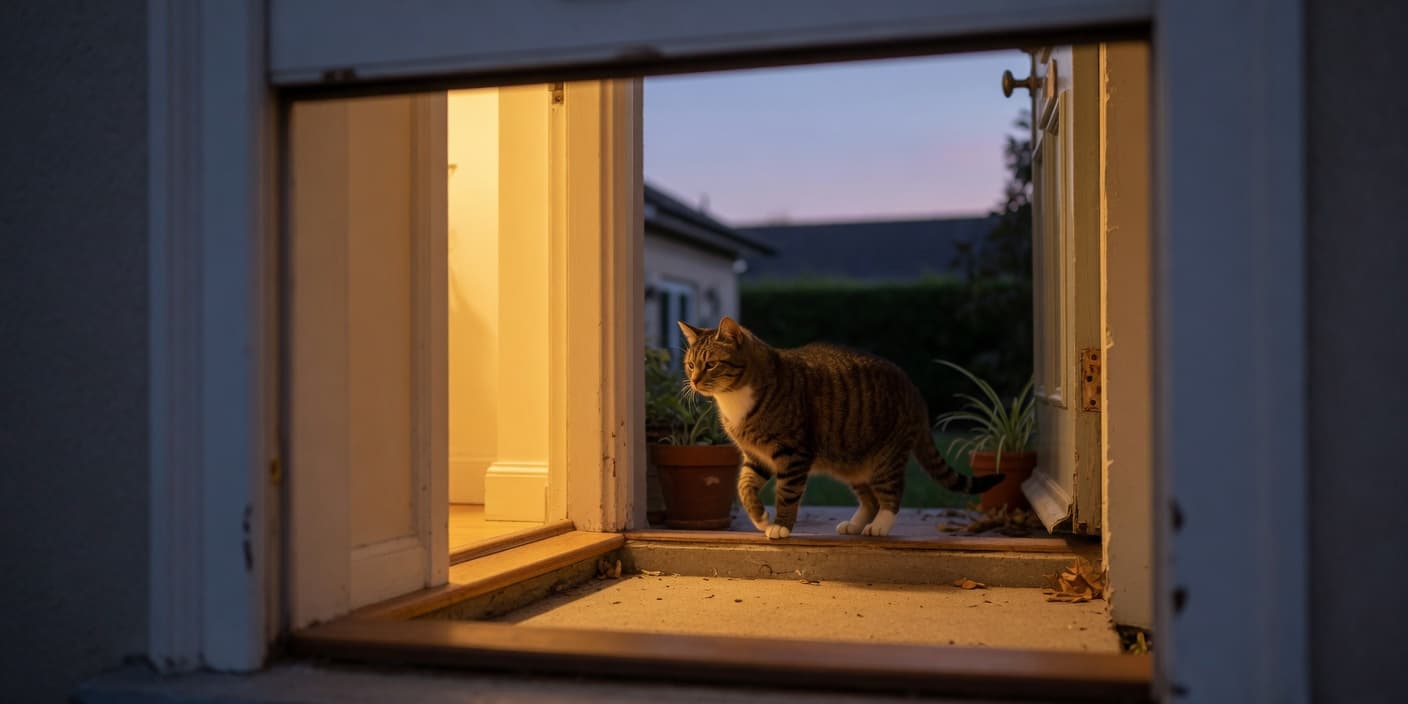
- At night, leave a door, cat flap or window open a crack where it is safe to do so, so a returning cat can get in.
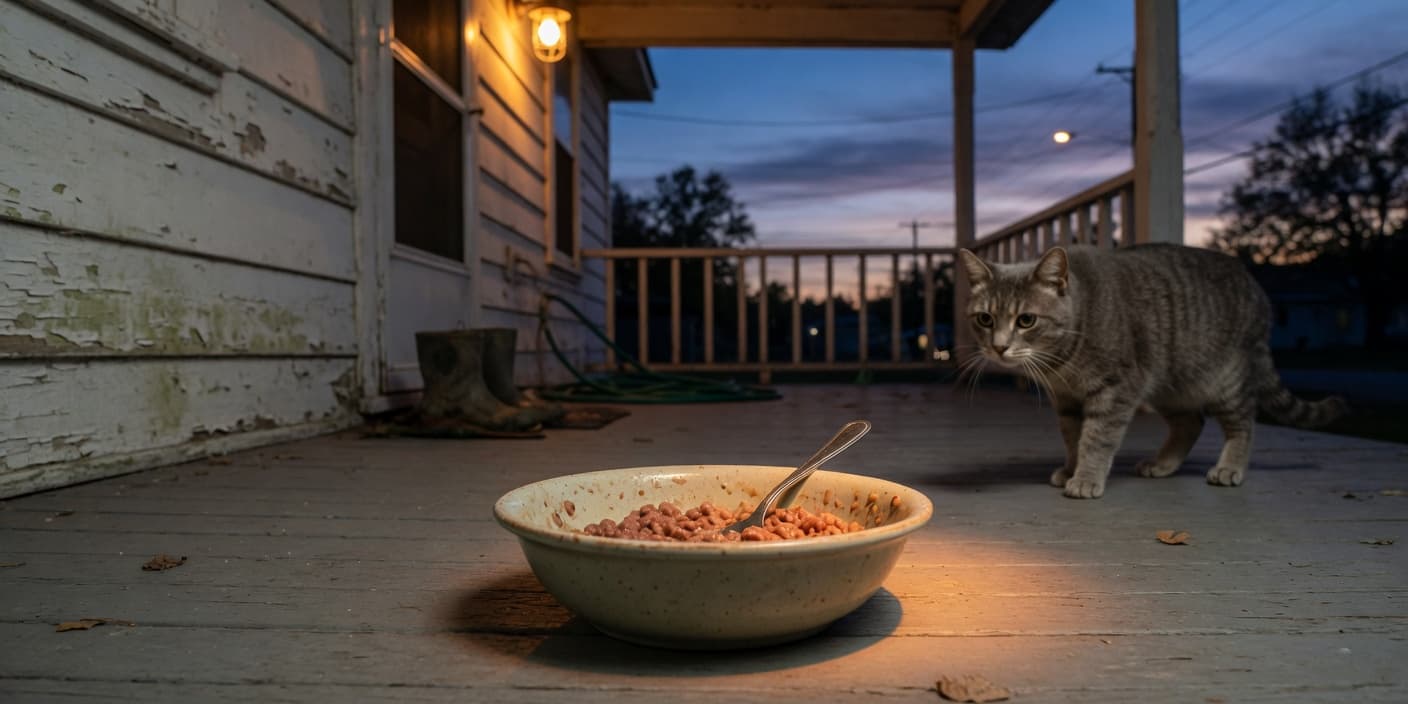
- Set up a feeding station in a sheltered spot close to where your cat went missing: water and strong-smelling food, at the same time every day.
- Put up a trail camera, or sprinkle a ring of flour around the bowl to see paw prints. Then you know whether the visitor is your cat, a neighbour's cat or a fox.
- If your cat is confirmed at the station but won't let you near, a humane trap set right there is often the safest way to get it home. Check it constantly, and borrow one from a shelter or rescue group if you can.
Step 4: Get the neighbourhood looking: posters, flyers and an online alert
The people most likely to find your cat live a few doors away: they own the sheds, garages and gardens it may be hiding in. Every one of them should know your cat is missing and what it looks like.
- Posters: a large, clear photo, the word MISSING, the street and date, your phone number and a request to check sheds and garages. Put them up at eye level along the streets around your home.
- Flyers: put one through every letterbox within a few hundred metres, and talk to people who are out early or late, such as delivery drivers, dog walkers and joggers.
- Local Facebook groups and neighbourhood apps: post the photo, the area and your number, and check them every day for sightings and found-cat reports.
- A targeted alert: PawAlarm shows your cat as an ad on Facebook and Instagram to residents around the place it went missing, including neighbours you can't reach in person.
Ask everyone to report a sighting with the time and place rather than try to catch the cat. A frightened cat that someone grabs at or chases will usually bolt to a new hiding place.
Step 5: Tell vets, shelters and your microchip registry
Someone may find your cat injured, or take it in believing it is a stray. Make sure every place a found cat could end up knows that yours is missing, and keep a recent photo and the microchip number to hand.
- Vets and emergency clinics nearby: injured cats are often brought here first, and staff scan for a microchip.
- Animal shelters and rescue groups: register your cat as missing, and visit in person every few days, because descriptions over the phone easily get mixed up.
- Your microchip registry: report your cat as missing and check that your phone number and address are current.
- Lost-and-found listings for your area: check them every day.
A microchip doesn't show where your cat is; it identifies your cat when a vet or shelter scans it. That is why current registry details matter so much: in a US study of more than 7,700 shelter animals (Lord et al., 2009), around 38% of microchipped cats were returned to their owners, compared with under 2% of cats without a chip.
At the same time, lost cats rarely turn up at a shelter. In a large US survey (ASPCA, 2012), 75% of lost cats got home. Of those, 59% came back on their own, 30% were found by searching the neighbourhood and only 2% were found at a shelter. So report your cat everywhere, but put most of your energy into the search close to home.
Step 6: Keep searching for days and weeks
Many cats reappear after a day or two, usually at night, when hunger finally outweighs fear. Others take much longer: cats are found alive weeks after going missing, sometimes only a few streets away. Stopping after the first weekend means giving up exactly that chance.
- Keep up the night rounds, the scent at your door and the feeding station, at the same times every day.
- Ask your neighbours again about sheds, garages and cellars, especially any that have been opened and locked again since your cat disappeared. A cat shut in without water is the real emergency.
- Widen the search step by step to the surrounding streets, and follow up every sighting.
- Replace torn or faded posters, post again in local groups after a week, and keep your alert and registry details current.
Outdoors, a cat usually finds water and something to eat, which is why searching for weeks makes sense. There is no point after which looking becomes pointless. If you have to slow down, keep the feeding station, your posters and your microchip details active.
Finding a lost cat is rarely about searching far. It is about searching close, quietly and again: in the right places, at the right time of night, with neighbours opening their doors and the familiar smell of home by yours. Keep that routine going and you give your cat the best chance of coming home.
Frequently asked questions
- Will my cat come back home on its own?
- Many cats do, often after one to three days and usually at night. In a large US survey, more than half of the lost cats that got home came back by themselves. Don't rely on it, though: a cat that is shut in or injured can't come home on its own, so keep searching actively at the same time.
- What should I do first if my cat goes missing?
- Search your home first, then the area a few houses around it, at dusk and after dark, with a torch. Ask your neighbours to check their sheds and garages, put the used litter box outside your door, and tell local vets, shelters and your microchip registry. Then put up posters and start a local alert.
- How do I get my lost cat to come home?
- With familiar scents and calm. Put the used litter box and unwashed bedding outside, leave a way in open at night, and set up a feeding station with strong-smelling food, always at the same time. At night, call softly, shake the treat bag and listen. Loud search parties are more likely to scare a hiding cat away.
- How far do lost cats usually go?
- Usually not far: a few houses or a few hundred metres from home, and an indoor cat often only two or three houses from the door. So search the immediate area thoroughly before you widen your radius.
- How long can a cat cope outside on its own?
- Usually days to weeks, as long as it finds water, which almost every cat outdoors does: puddles, dew, garden ponds. The real danger is a cat shut in without water in a shed, garage or cellar. That is why it matters so much that neighbours open those spaces and look.
- How long should I keep looking for my lost cat?
- Longer than most people think. Cats are regularly found after weeks, often close to home, because they were hiding, shut in or being fed by someone. There is no deadline after which searching becomes pointless: keep your feeding station, posters, listings and microchip details active for weeks.
You might also like

Lost Cat: The First 24 Hours
A calm, practical guide to the crucial first 24 hours after your cat has gone missing.
6 min read

Where Do Lost Cats Hide? (Closer Than You Think)
Why a lost cat usually sits silently nearby — and how to search methodically in the small radius where it's actually hiding.
8 min read
How to Lure a Lost Cat Back Home: What Actually Works
A feeding station, quiet dusk hours and an open door bring cats home — litter boxes and dirty laundry don't. Here's what actually works.
7 min read
Chances of Finding a Lost Cat: 24 Hours, 3 Days, a Week
Around three out of four lost cats come home, and most were never far away — here is how the odds change day by day and what actually improves them.
7 min read