Cat Hasn't Come Home? When to Worry and What to Do Tonight
Published · 7 min read
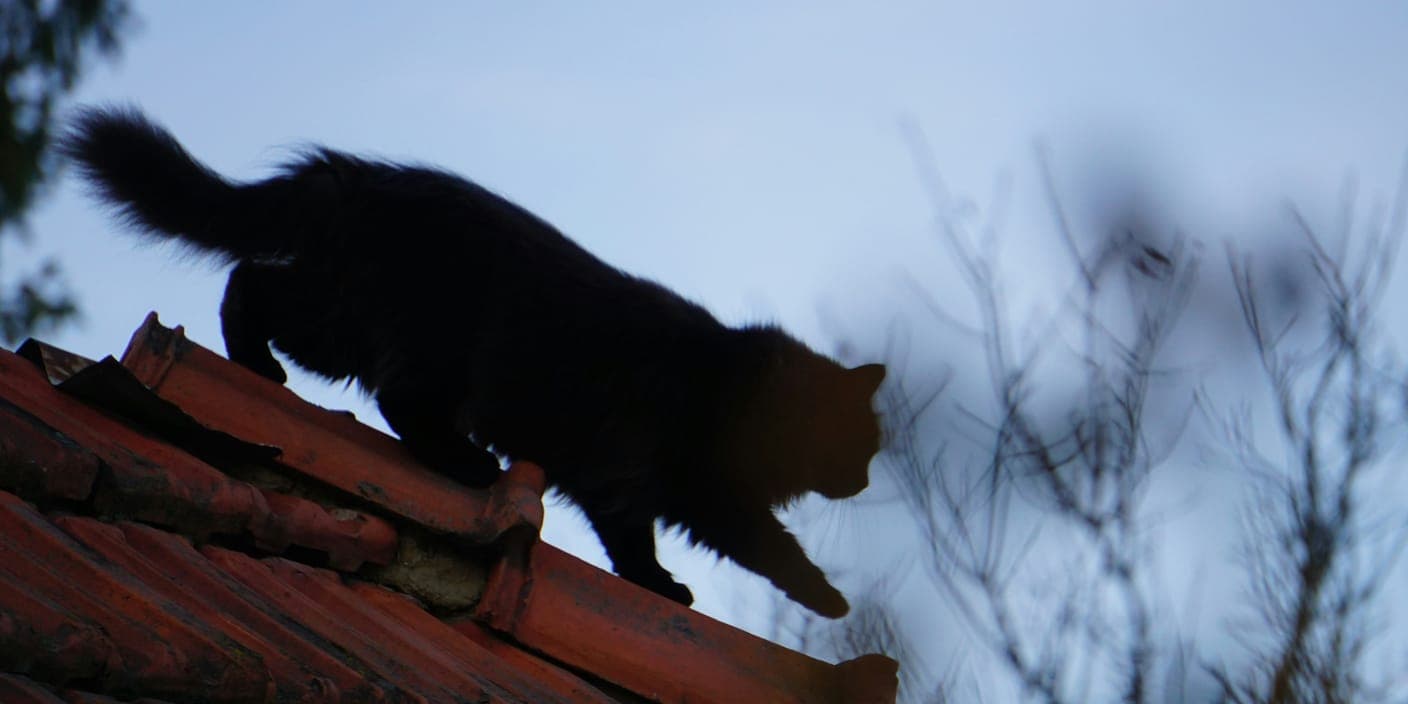
If your cat hasn't come home, compare tonight with its usual routine. Many outdoor cats that miss an evening come back by themselves, so one late night on its own is not an emergency. Act tonight, though, if your cat is normally punctual, if it was its first time outside, if you have recently moved, or if it is an indoor cat, old or unwell, or the weather is bad. Check your home, your shed and garage, ask your neighbours to look in theirs and put familiar scents by the door. If your cat still isn't back the next morning, start a full search.
Is it normal for a cat not to come home at night?
For many outdoor cats, now and then, yes. Cats are busy after dark: in a GPS study in Reading, UK, pet cats covered a larger area at night than during the day (Thomas et al., 2014). An outdoor cat may spend a mild night hunting, wait for a rival cat to leave its path, or sleep somewhere sheltered. What matters is not the clock but your cat's own pattern. A cat that often wanders until morning is a different case from one that has been at the door at six every evening for years.
It also helps to know how small a pet cat's world usually is. When researchers fitted GPS trackers to 925 pet cats in six countries, the average home range was 3.6 hectares, and they concluded that pet cats stay close to home, within roughly 100 metres (Kays et al., 2020). So a cat that hasn't come home is usually not far away. It is more likely nearby: shut in somewhere, hiding after a fright, or curled up in someone else's house.
When to worry: it depends on your cat
The same night away can be harmless for one cat and urgent for another. In the situations below, act tonight rather than waiting until morning. The same goes for any cat that is old, ill or on medication.
Your cat's first time outside
On its first trips outdoors a cat doesn't know the area, the neighbourhood cats or the way back in yet. A fright from a dog, a car or a territorial cat can send it under the nearest hedge or shed, where it stays silent. Don't count on it finding its own way back: walk the gardens around your home slowly this evening with a torch, call softly, and put its litter box and bedding outside your door. Once it is home, start again with short, supervised trips just before a meal, so it learns that home is where the food is.
You have recently moved
A cat in a new home has no territory yet, and some head back towards the old one. Search around the new address as you would for an indoor cat that got out, and ask someone near your old home to keep a look out.
An unneutered tom or a female in heat
Unneutered cats roam further and stay away longer, especially in the mating season, so nights away are more common. In the largest GPS study of pet cats, unneutered cats moved more than neutered ones, although only a few took part (Kays et al., 2020). A tom out for the night is still at risk from fights and traffic, so check the usual places, and talk to your vet about neutering once it is home.
A neutered cat or a reliable cat that broke its routine
This is the clearest warning sign. A neutered cat with a fixed routine that misses its evening meal rarely does so without a reason. Often it is shut in a shed, garage or cellar, hurt, hiding after a fright, or being fed in someone else's house: in a study of 1,210 missing cats, 11% of the cats found alive were inside another person's home (Huang et al., 2018). Treat a missed routine as a reason to search tonight.
Winter, frost or heavy rain
In cold and wet weather cats look for shelter, and the dry places they choose, such as garages, sheds, cellars and car engine bays, are exactly where they get shut in. A cat may also sit out a storm somewhere dry and come home later. In hard frost, or if your cat is old, thin or short-haired, don't wait for morning.
An indoor cat that slipped out
An indoor cat that got out hasn't just failed to come home: it doesn't know the way back and usually hides very close by. In the same study of missing cats, indoor-only cats were found a median of just 39 metres from where they escaped (Huang et al., 2018). Start searching straight away.
What to check tonight
Before you go to bed, work through the places where cats that don't come home are most often found: close by, shut in or hidden.
- Search your own home first: wardrobes, drawers, under beds, behind the washing machine and inside the sofa. Cats sleep in odd places and sometimes get shut in a room.
- Open your own shed, garage, cellar, greenhouse and car, and look right inside, not just from the doorway.
- Ask your nearest neighbours this evening to check their sheds, garages and cellars, especially anything that stood open today, and ask whether you may look yourself.
- After dark, walk slowly around your home and the nearest gardens with a torch. Look under cars, decks, hedges and steps, where a cat's eyes reflect the light. Call softly, shake the treat bag, then stay quiet and listen.
- Put the used litter box and your cat's bedding outside the door, leave the cat flap unlocked or a door or window open a crack where it is safe, and put food out at the usual time.
- Pick a clear, recent photo of your cat and note when and where you last saw it, so you are ready to make a poster in the morning.
Will my cat come back on its own?
Often, yes. In a US national survey, 75% of lost cats got home, and 59% of those came back by themselves (Weiss et al., 2012). In an Ohio study of 138 lost cats, two thirds of the cats that were recovered returned home on their own, and the median time to recovery was five days (Lord et al., 2007).
So it is worth hoping for longer than one night. Among the cats found alive in the study of 1,210 missing cats, the median time missing was six days, and some were found weeks later (Huang et al., 2018). But coming home on its own is not the same as needing no help. A cat that is shut in can't get out by itself, and an injured or frightened cat may stay hidden for days. Keep searching close to home while you wait.
When to start a full search
Give a healthy outdoor cat that has stayed out before the night, while you do the checks above. Start a full search straight away if one of the warning situations applies, and in any case if your cat isn't back by the next morning.
- The next morning: treat your cat as missing. Put up posters with a clear photo, tell local vets, shelters and your microchip registry, post in local groups, and keep searching in the evenings.
- After two days: follow a day-by-day plan, widen the search radius step by step and ask your neighbours again about sheds and garages.
- At any time: start immediately for an indoor cat, a cat in a new home, an old or sick cat, or in extreme weather.
Your neighbours are the people most likely to spot your cat, and you can't knock on every door. PawAlarm shows your cat's photo as an ad on Facebook and Instagram to people who live around the place it went missing, and the free poster tool turns your photo into a poster you can print tonight.
With luck, tonight ends with your cat at the door. If it doesn't, you will already have done the things that help most: checked close by, told your neighbours and got ready to search.
Frequently asked questions
- How long can a cat stay out before I should worry?
- It depends on your cat. For an outdoor cat that sometimes stays out all night, one night away is not unusual on its own. For a cat with a fixed routine, worry when it misses the time it always comes in, such as its evening meal. For an indoor cat, a cat outside for the first time, a cat in a new home, or an old or unwell cat, start looking straight away.
- My cat didn't come home last night. What should I do?
- Search your home first, then your own shed, garage and car. Ask your neighbours to check theirs, walk the nearest gardens after dark with a torch, and put the used litter box and bedding by your door. If your cat isn't back by the morning, put up posters and tell vets, shelters and your microchip registry.
- My cat hasn't come home all day. Is that normal?
- For a cat that usually comes in to eat and sleep during the day, a whole day away is unusual and worth acting on. It may be shut in or hiding somewhere nearby. Check sheds, garages and cellars close to home, and search slowly at dusk, when a hiding cat is most likely to move.
- I let my cat out for the first time and it hasn't come back. What now?
- Don't wait. A cat on its first outing doesn't know the area yet and often hides close by after a fright. Search the gardens around your home slowly after dark with a torch, put its litter box and bedding outside, leave a way in open, and ask your neighbours to check their sheds. If it isn't back by the morning, start a full search.
- My neutered cat hasn't come home. Is that unusual?
- More unusual than for an unneutered cat. Neutered cats tend to roam less, so a neutered cat that misses its routine is more likely to be shut in, hurt or hiding than out exploring. Check sheds, garages and cellars nearby tonight and ask your neighbours to look.
- My cat goes out through the cat flap but won't come back in. Why?
- If your cat is waiting outside, the flap may be the problem. Check that it isn't locked in one direction, that a microchip flap still reads your cat's chip, and that another cat hasn't been coming in and scaring yours. Prop it open for a few days and reward your cat for coming through. If your cat hasn't come back at all, treat it as a cat that hasn't come home and do the checks above.
You might also like

Lost Cat: The First 24 Hours
A calm, practical guide to the crucial first 24 hours after your cat has gone missing.
6 min read

Cat Missing for 2 Days? What's Normal, What to Do, and When to Worry
What it means when your cat has been gone for days, how likely it is to come back on its own, and a day-by-day plan to bring it home faster.
7 min read

How to Find an Indoor Cat That Got Outside
A strictly indoor cat that gets out freezes and hides close to the exit point. Here's how to search effectively and recover it.
6 min read

How Far Do Cats Roam From Home? What GPS Studies Show
What GPS tracking of pet cats shows about how far they roam, why some range further than others, and how to use it when your cat is missing.
7 min read